EURUSD is moving in an Ascending channel, and the market has rebounded from the higher low area of the channel
Daily Forex Trade Setups Aug 06, 2025
Stay on top of market trends with our Daily Forex Trade Setups (Aug 06, 2025)
EURUSD Pauses Rally with U.S. Growth Doubts in the Spotlight
When it comes to the world of currency trading, not every day is filled with wild price swings or trend reversals. Sometimes, the market just takes a pause — and that’s exactly what’s happening with the Euro lately. It’s trading sideways, and the reason behind this isn’t because the Euro is doing anything spectacular. Instead, it’s more about the US Dollar facing a rough patch.
Let’s dive deeper into what’s going on, why the Euro seems to be holding its ground, and what this means going forward.
US Economy Worries: What’s Dragging the Dollar Down
Right now, the biggest story in the forex world isn’t really about the Euro—it’s all about what’s going wrong with the US Dollar. And believe me, there’s plenty to talk about.
Stagflation Fears Are Back
One of the main reasons the Dollar is losing steam is the growing fear of stagflation. If you’re not familiar, stagflation is when an economy slows down, unemployment goes up, and inflation rises—all at the same time. It’s a nightmare scenario for any central bank because it’s hard to fix all three problems at once.
Recent economic reports out of the US are painting a picture that fits this definition. The services sector, which makes up a large chunk of the US economy, is showing signs of serious slowdown. The latest data revealed:
-
Business activity is barely growing
-
Employment in the sector is shrinking
-
Prices are rising faster than before
-
New orders are drying up
That’s a tough mix for any economy to handle, and it’s no wonder traders are getting nervous.
Confidence in the Fed Is Slipping
Normally, when the US economy wobbles, all eyes turn to the Federal Reserve. But this time, there’s uncertainty even there.
With speculation swirling about possible leadership changes at the Fed — especially talk of President Trump planning to make early replacements — investors are getting jittery. If the central bank loses its independence or shifts direction under political pressure, it could have big consequences for the Dollar’s value.
Add to that the idea that the Fed might need to cut interest rates sooner than expected to cushion the economy, and you’ve got a recipe for a weakening currency.
The Euro’s Steady Ride: Not Strong, Just Stable
So, if the Euro isn’t surging, why does it seem so steady?
Well, it’s not that the Eurozone is suddenly an economic powerhouse — far from it. But when compared to the US, things look slightly more stable. Sometimes, being the “less bad” option is enough in the forex world.

Mixed Eurozone Data, But No Panic Yet
Let’s be clear: Europe has its own issues.
Germany, the region’s largest economy, recently reported weaker factory orders for the second month in a row. Retail sales figures are only just beginning to rebound, and the broader economic momentum isn’t great.
But here’s the thing — there’s no panic. The Eurozone isn’t flashing red like the US economy seems to be. And right now, that’s making the Euro a safer bet for traders who are losing faith in the Dollar.
Global Trade Tensions Add to the Pressure
If weakening economic data wasn’t enough, there’s another storm brewing — trade tensions.
President Trump has reignited fears of a global trade war, threatening fresh tariffs on China and India for their oil trade with Russia. He’s also warning the European Union about steep tariffs if they don’t meet certain investment commitments.
And just to turn up the heat even more, he’s targeting the pharmaceutical industry with threats of 250% levies.

EURUSD is moving in an uptrend channel
All of this is creating a lot of global uncertainty. And when things feel unpredictable, investors tend to move away from currencies tied to risky political decisions — like the US Dollar.
What to Watch Next: Key Events and Voices
Looking ahead, the focus now shifts to what policymakers will say and do in response to all this uncertainty.
In Europe, retail sales numbers will give us a better sense of how consumer demand is holding up. Any signs of a strong rebound could offer the Euro a little more support.
In the US, several Federal Reserve officials are scheduled to speak. Their comments will be closely watched for hints about what the Fed might do at its next policy meeting in September.
-
Will they downplay the slowdown?
-
Will they hint at a rate cut?
-
Or will they stay the course and hope the economy finds its footing?
Whatever they say, it’s going to move markets.
Final Thoughts: A Waiting Game for Traders
Right now, the Euro isn’t shining — it’s just standing still. But in a market where the US Dollar is stumbling, that’s enough to look like strength.
The big takeaway here is that traders aren’t flocking to the Euro because of good news in Europe. They’re doing it because of bad news in the US. Weak job reports, slowing services activity, trade tensions, and political interference at the Fed are all weighing on the Dollar.
If you’re watching the markets closely, keep your eyes on economic data releases and central bank speeches. This sideways movement may not last forever — and the next big move could come down to who messes up less: the US or the Eurozone.
In the end, it’s less about one currency winning and more about which one is losing slower. And for now, that slow loser isn’t the Euro.
GBPUSD Caught in Limbo as Central Bank Decisions Loom
The world of currency moves fast, but when you notice the Pound Sterling acting a bit differently—kind of stuck in place—you know something’s brewing behind the scenes. That’s exactly what’s happening right now. The British Pound isn’t going up or down much. It’s just hovering, waiting. But why? Well, there are a few major events that have everyone’s attention, and they could shake things up big time.
Let’s break down what’s going on, why it matters, and what to keep an eye on in the days ahead.
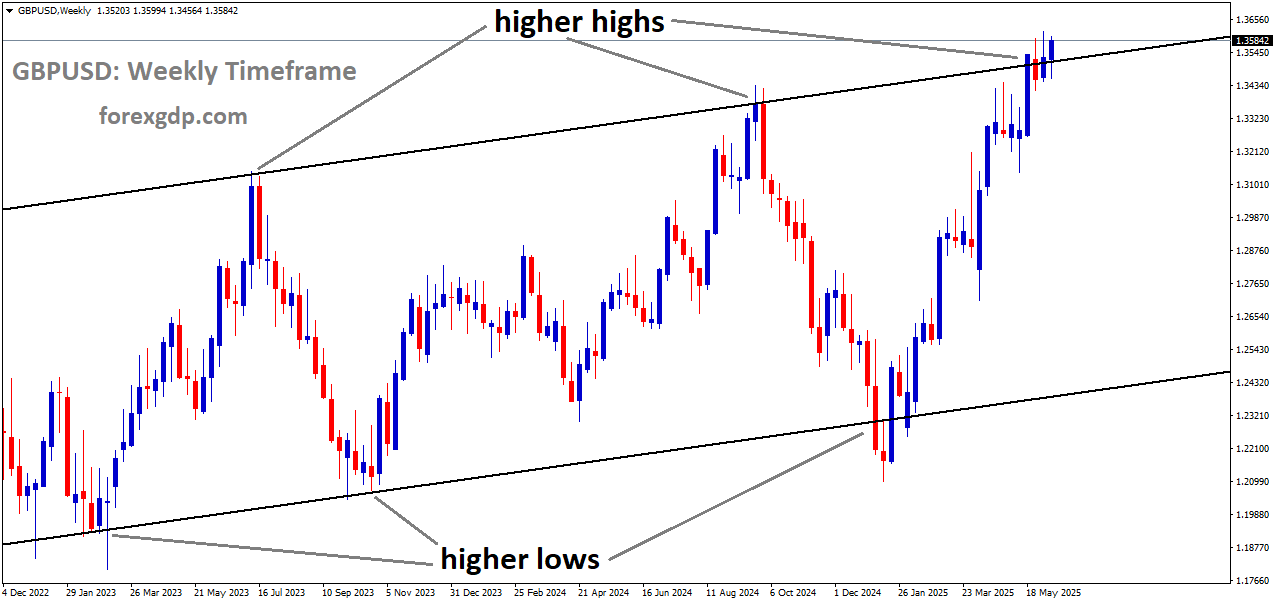
GBPUSD is moving in an uptrend channel, and the market has reached a higher high area of the channel
Big Decisions Await: A Leadership Shift at the US Fed
One of the main reasons investors are holding their breath is because of a big change coming to the US Federal Reserve. Recently, Fed Governor Adriana Kugler stepped down, and now everyone’s waiting to see who will take her place. This decision could have a big impact on how the Federal Reserve moves forward with interest rates and economic policy.
US President Donald Trump has been vocal about the replacement. He said he’s narrowed the list down to four candidates. While he hasn’t named all of them, he did mention two familiar faces: Kevin Hassett, one of his economic advisers, and former Fed Governor Kevin Warsh. He described it casually as “two Kevins and two other people.”
What’s the big deal about this? Well, whoever gets picked might influence how much independence the Federal Reserve really has. If Trump’s pick leans too closely into his own economic goals, it could mean future Fed decisions aren’t entirely neutral. Investors don’t love uncertainty, and this adds another layer to the mix.
All Eyes on the Bank of England: Will Interest Rates Drop?
At the same time, over in the UK, the Bank of England (BoE) is getting ready to make a major call of its own. Everyone’s expecting a small but meaningful interest rate cut—likely a reduction of 25 basis points. If that happens, the base rate would go down to around 4%.
Why are they doing this? It’s part of a bigger strategy to support the UK economy, which has been feeling the pressure lately. Inflation has been sticking around longer than anyone wants, and although some of the heat has cooled off, the BoE is still worried. Their governor, Andrew Bailey, has been warning that they’re trying to move “gradually and carefully.” Translation? No sudden moves. But they’re clearly getting ready to act.
One of the biggest things driving this decision is the outlook for inflation and jobs. Prices in the UK have been rising, especially when it comes to essentials like food and energy. That’s hitting people hard, and it’s also raising concerns about how much consumers can really spend. On top of that, more and more people are expecting higher inflation in the future, which can end up becoming a self-fulfilling prophecy if it’s not handled early.
The Job Market Is Changing Too
Another thing that’s catching the Bank of England’s attention is the job market. There are signs that hiring is slowing down. Employers are holding back, partly because their costs are going up—especially when it comes to paying into things like national insurance. That makes it harder for businesses to justify expanding their teams.
All of this means the BoE has a tricky balance to strike. If they cut rates too much, they risk letting inflation get out of hand again. But if they don’t act at all, they might leave businesses and families struggling even more. So, this upcoming decision is being watched very closely.

Back in the US: A Slower Economy Could Lead to Rate Cuts
It’s not just the UK that’s dealing with economic uncertainty. Across the Atlantic, the US is facing its own set of challenges. Hiring in the US has slowed down too. The latest jobs report—commonly known as the NFP (Non-Farm Payrolls) report—came in weaker than expected. Not only that, but job numbers from previous months were quietly revised downward, and the unemployment rate ticked higher.
This is all adding up to more pressure on the US Federal Reserve to cut interest rates soon, maybe even as early as September. Analysts believe there’s a strong chance that borrowing costs in the US could come down by 25 basis points. That would be a big shift, and it’s yet another reason why both the Dollar and the Pound are stuck in place right now. Everyone’s waiting for confirmation before making their next move.
Trade Tensions Are Heating Up Again
Just when you thought the trade war talk had died down, it’s back. President Trump recently hinted that new tariffs are coming soon. This time, they might hit industries like semiconductors, pharmaceutical products, and other high-tech sectors. This has rattled some nerves, especially for companies that rely heavily on global supply chains.
When you combine all of these factors—new tariffs, slower job growth, and looming central bank decisions—it’s easy to see why the markets are acting cautious. Nobody wants to make a big move until there’s more clarity.
The Takeaway: A Period of Calm Before Potential Storms
So, what does all this mean for you or anyone paying attention to global currencies? The Pound Sterling is currently stuck in a holding pattern. It’s not necessarily weak—but it’s not strong either. It’s just… waiting. And the same goes for the US Dollar.
This moment is what traders like to call a “consolidation phase,” where prices hover within a tight range while everyone waits for something to break the silence. And that “something” is coming very soon—between the Fed appointment, the BoE interest rate announcement, and possible new US tariffs.
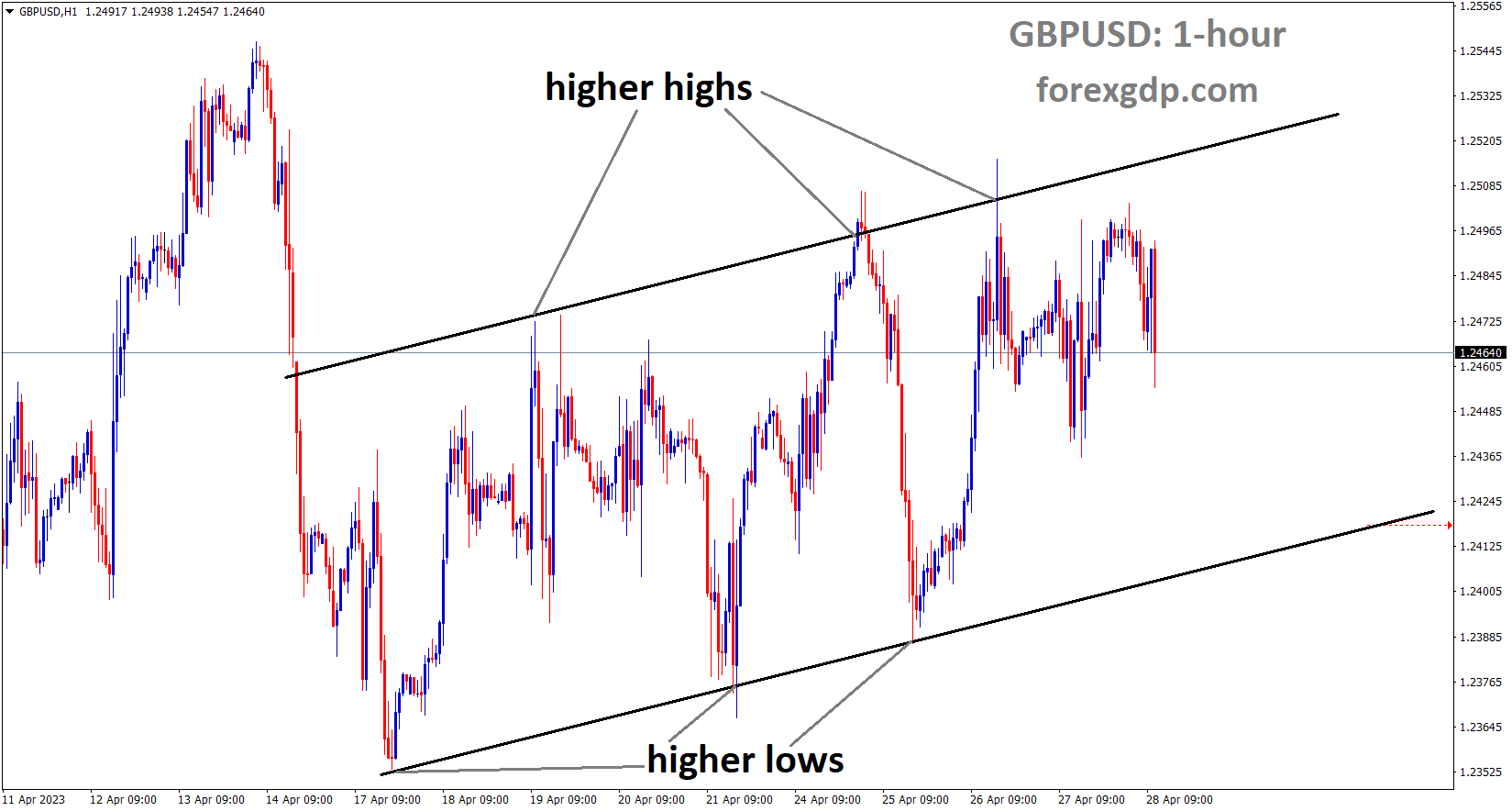
GBPUSD is moving in an Ascending channel, and the market has fallen from the higher high area of the channel
For now, patience is the name of the game. But keep an eye on the headlines. When those announcements hit, the calm may quickly give way to sharp moves in either direction.
Final Summary
The Pound Sterling is moving sideways as global investors look ahead to key decisions from both sides of the Atlantic. In the US, a new Fed appointee could shape economic policy for months to come, especially with rate cuts likely on the table. Meanwhile, the Bank of England prepares to cut interest rates as inflation cools and labor demand declines. Add in trade war jitters and slower job growth in both countries, and you’ve got the recipe for a very cautious market.
Right now, the GBP/USD story isn’t about sudden price shifts—it’s about waiting for the next big event. And once those decisions are made, the currency market could finally pick a direction.
USDJPY Slides as Yen Gains Edge, But Bulls Stay Cautious
The Japanese Yen has been making some quiet moves lately, but not with the kind of strength that gets traders too excited. If you’ve been keeping an eye on currency shifts or just curious about global money trends, then this one’s for you. Let’s unpack what’s going on with the Japanese Yen (JPY), what’s holding it back from gaining big, and how global economic vibes are playing into all this.
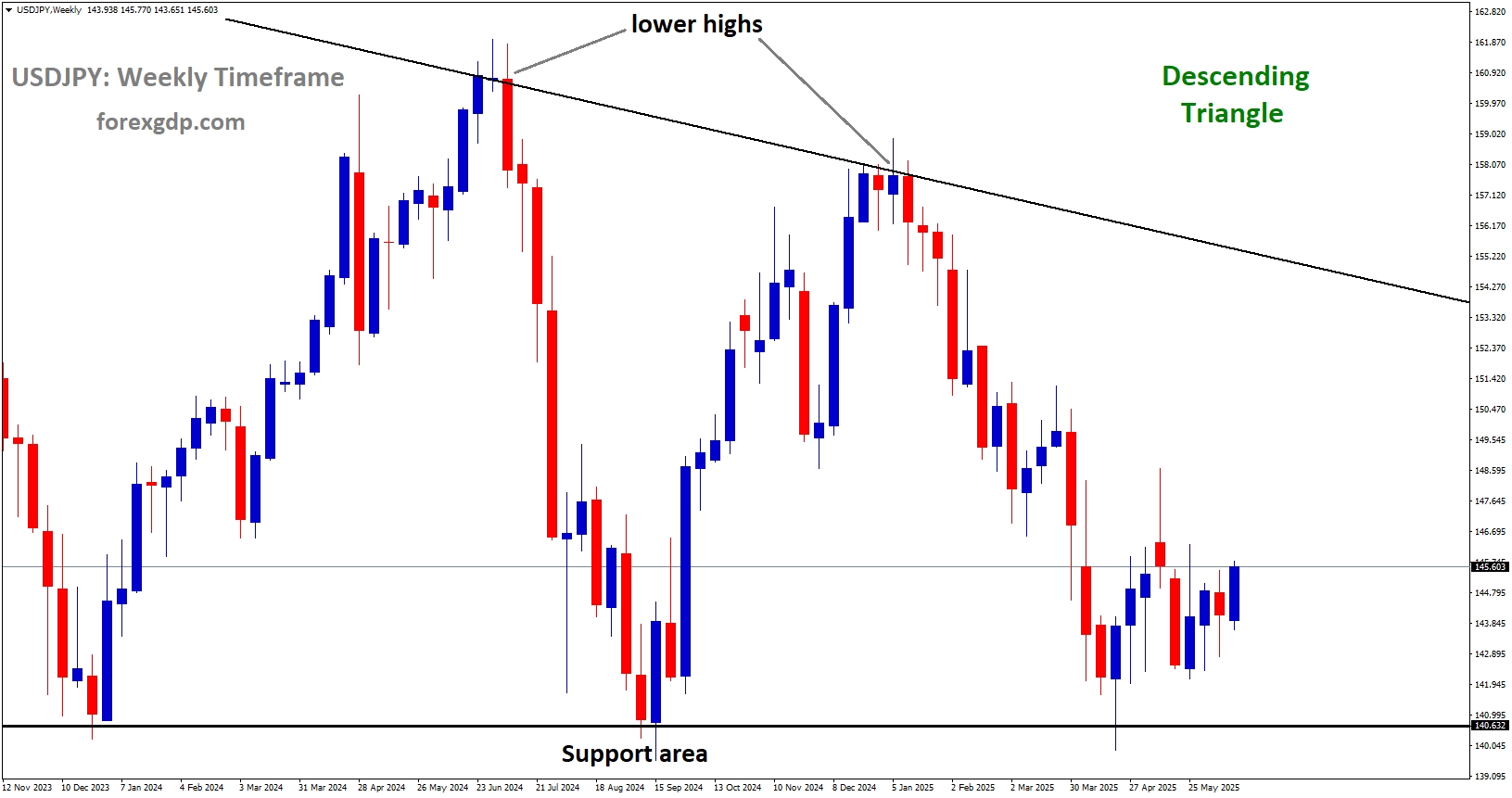
USDJPY is moving in a descending triangle pattern, and the market has rebounded from the support area of the pattern
The Tug-of-War Behind the Yen’s Movements
The Yen has recently caught a bit of support and started climbing slowly against the US Dollar (USD). But here’s the thing—it’s lacking any serious momentum. Sure, there are a few reasons behind the mild boost, but there’s also plenty keeping it from really taking off.
Whispers of a Rate Hike in Japan
One of the key reasons some investors are holding onto hope for the Yen is the talk around Japan’s central bank—the Bank of Japan (BoJ)—possibly hiking interest rates later this year. A rate hike tends to strengthen a currency, so naturally, the anticipation around this has kept some interest alive in the JPY.
But it’s not that simple.
Lately, Japan’s economy has shown signs that maybe it’s not quite ready for tighter monetary policy. Inflation data and wage numbers are throwing mixed signals, and that’s what’s keeping investors from going all-in on the Yen.
Wages, Inflation, and What’s Happening on the Ground in Japan
If you’re wondering why the BoJ isn’t jumping straight into a rate hike, the answer lies in the numbers—and they’re not all that encouraging.
Real Wages Still Struggling
Japan’s latest wage data showed that while nominal wages (that’s the number before adjusting for inflation) did rise by 2.5% compared to a year ago, it still missed expectations. Even more concerning? When you factor in inflation, real wages actually dropped for the sixth month in a row. That means people are earning more on paper, but their purchasing power is still slipping.
Inflation Slows But Remains a Factor
The type of inflation Japan uses to calculate real wages—including prices for fresh food—slowed down to 3.8%. That’s the lowest in seven months, which might sound like a good thing. But when wages are shrinking and prices are still relatively high, it paints a picture of a consumer base that’s under pressure.
These two pieces—sluggish real wages and still-sticky inflation—make it hard for the BoJ to justify raising rates aggressively.

Political Uncertainty Clouds the Outlook
To add to the mix, the ruling Liberal Democratic Party recently took a hit in local elections, stirring up fresh doubts about Japan’s fiscal plans. With opposition parties calling for more spending and even tax cuts, it’s possible that political instability could further delay any bold moves by the central bank.
On the Other Side: Why the US Dollar Isn’t Gaining Either
Now let’s flip the coin.
You’d expect the US Dollar to be rising if the Yen’s struggling, right? Surprisingly, the USD isn’t flexing much muscle either. In fact, recent economic signs in the US are starting to point toward a possible interest rate cut by the Federal Reserve (Fed).
Signs of a Cooling US Economy
A few recent data points have sparked talk of a Fed rate cut as early as September. The ISM manufacturing index—a closely watched economic indicator—dipped unexpectedly in July. Add to that a weaker-than-expected jobs report, and the idea of an overheated US economy quickly fades.
These signals suggest that the Fed might ease up on its aggressive rate stance, which would naturally soften the US Dollar. That’s why the USD/JPY pair has been moving in a tug-of-war, with neither side gaining decisive control.
US Trade Numbers Offer Some Hope
One slightly brighter spot for the Dollar came from trade data. The US trade deficit shrank more than expected recently, which is typically seen as a positive sign. It suggests that exports held up while imports declined, possibly due to earlier surges driven by tariffs. Still, this alone isn’t strong enough to prop up the Dollar for long.
What’s Likely to Happen Next?
With the Japanese Yen and the US Dollar both lacking a clear sense of direction, investors are left watching and waiting for the next big clue. So, what should you keep an eye on?
-
Central Bank Speeches: Comments from Federal Reserve officials or BoJ members can shift sentiment quickly. Any hint of changing views on interest rates will likely cause waves.
-
Global Risk Mood: The overall vibe in financial markets—whether people feel cautious or bold—often impacts safe-haven currencies like the Yen. If investors grow nervous, the Yen could gain strength even without solid economic data backing it.
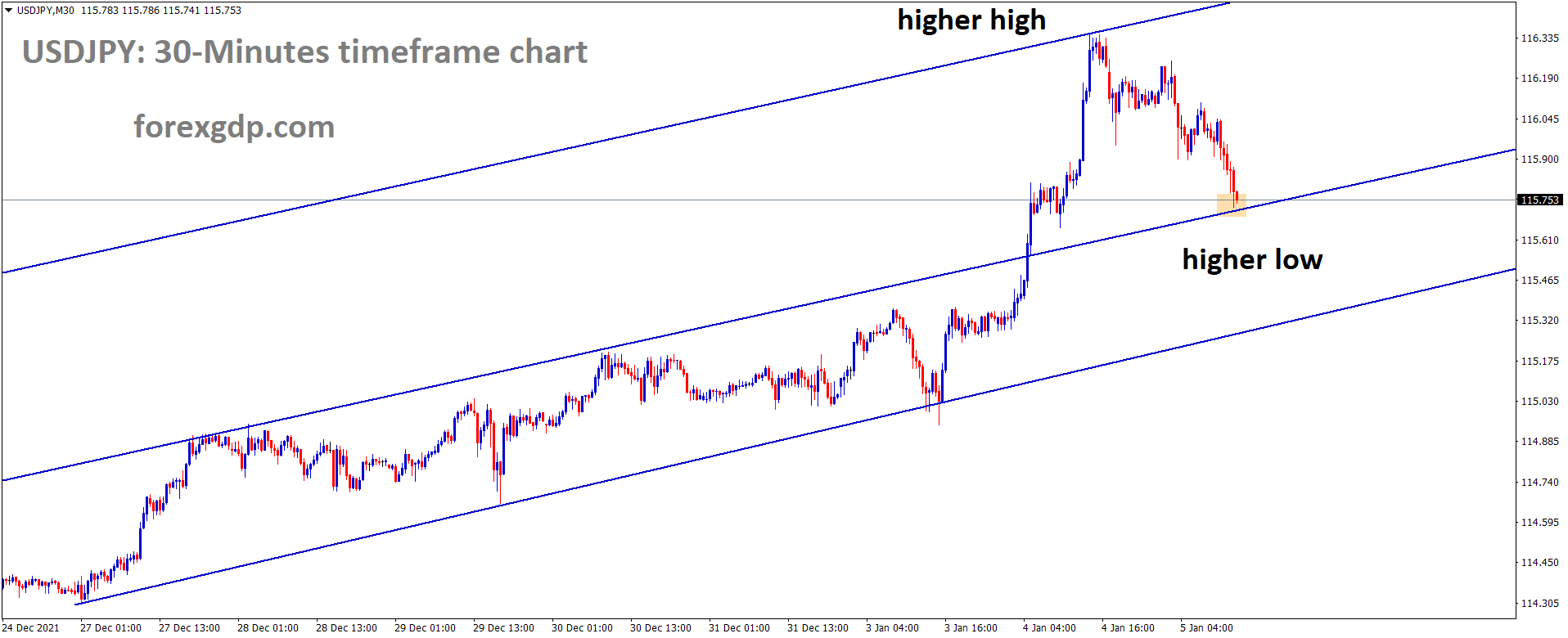
USDJPY is moving in an Ascending channel, and the market has reached the higher low area of the channel
-
More Data on Wages and Inflation: For the BoJ to consider tightening its policy, it’ll want to see real wage growth and sustainable inflation. Watch out for any improvement in these numbers.
Wrapping It All Up
So, here’s the big picture: the Japanese Yen is getting a little love, but not enough to make a big comeback just yet. It’s caught between a slow recovery at home, political uncertainties, and global economic shifts that are making everyone second-guess their next move.
At the same time, the US Dollar isn’t exactly soaring either. With weak data and growing talk about potential rate cuts in the US, the currency market feels like it’s in limbo.
In the end, if you’re watching the USD/JPY pair or just curious about where currencies are headed, keep your focus on central bank signals, wage trends in Japan, and how the global economy plays out over the next few weeks. We’re in one of those “wait-and-see” moments, and sometimes, that’s when the most surprising shifts happen.
GBPJPY Hovering High with All Eyes on BoE’s Next Move
If you’ve been watching the GBP/JPY currency pair recently, you’ve probably noticed something interesting—it’s kind of stuck. After bouncing back a bit from a recent low, the pair hasn’t gained much traction. It’s hanging out just above the 196 mark, but it seems hesitant. Why? Well, it all comes down to what traders are waiting for: the Bank of England’s (BoE) big interest rate decision.
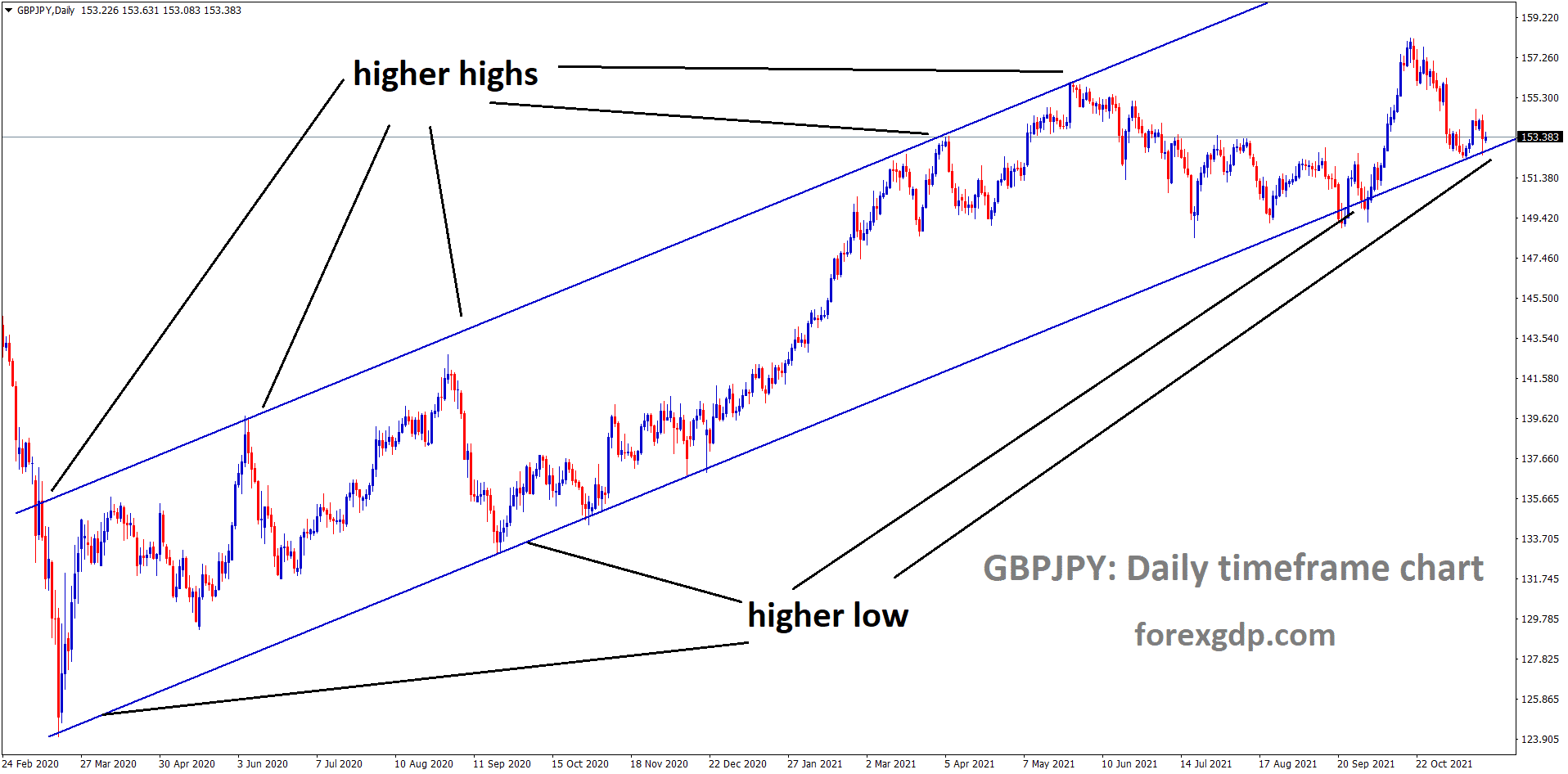
GBPJPY is moving in an Ascending channel, and the market has reached the higher low area of the channel
The uncertainty around this decision has most market participants holding their cards close. Nobody wants to take a major position until the BoE gives a clearer picture of what’s next for the British economy. Add to that the changing sentiment around Japan’s monetary policy, and you’ve got a currency pair caught in a tug of war.
BoE in Focus: Why Everyone’s Talking About It
Will the BoE Cut Rates?
The buzz right now is that the Bank of England might cut interest rates by 0.25% this week. And if that happens, it would be a big deal. Why? Because it signals a shift in how the UK is responding to its slowing job market and cooling wage growth.
Over the past few months, the UK labor market hasn’t looked as strong as it did earlier this year. Fewer job openings, slower hiring, and wage increases that aren’t quite as hot as they used to be have some analysts convinced that a rate cut is coming. The BoE itself had projected stronger wage growth back in May, so this softening pace is catching attention.
But Inflation Still Lingers
On the flip side, inflation hasn’t disappeared. It’s still higher than where the BoE would like it to be. And that’s what makes this rate decision tricky. Cutting interest rates too quickly could push inflation back up. So even if the BoE decides to cut, it’s likely to strike a cautious tone, emphasizing that any future moves will depend on how the economy evolves.
This careful approach could make the British Pound wobble a bit. Depending on how the BoE communicates its outlook, GBP could either weaken further or stabilize if traders feel reassured that inflation is still being managed.
Japan Steps Up: The BoJ’s Shift Could Shake Things Up
While everyone’s looking at what the BoE might do, the Bank of Japan (BoJ) has been quietly changing its game. After years of ultra-low interest rates, the BoJ is now hinting at tightening policy—possibly even raising interest rates by the end of the year.
This is a big shift from Japan’s traditionally cautious monetary stance. The BoJ recently revised its inflation forecast, suggesting that it’s seeing stronger price growth than expected. If inflation in Japan keeps rising and the economy holds steady, the BoJ might feel confident enough to increase rates, which would boost the Japanese Yen.

When one central bank is considering cuts (like the BoE), and the other is preparing to hike (like the BoJ), that creates a divergence that traders can’t ignore. It’s one of the reasons why GBP/JPY isn’t seeing much upward momentum. Even if GBP gets a little boost, the JPY could strengthen right alongside it, keeping the pair in check.
Why Traders Are Cautious Right Now
Let’s be real: traders love movement, but they hate uncertainty. And right now, both GBP and JPY have question marks hanging over them. On one side, there’s a possible rate cut from the BoE that could weaken GBP. On the other, there’s a potential rate hike from the BoJ that could strengthen JPY.
This puts GBP/JPY in a weird limbo. There’s no clear direction, and without solid signals from either central bank, traders are staying on the sidelines. Most are waiting to see what Thursday’s BoE decision brings before making any big moves.

GBPJPY is moving in a box pattern
Also, don’t forget the broader market mood. When stock markets are in a good mood, riskier currencies like GBP usually benefit, while safe-haven ones like JPY take a back seat. But even with stocks showing some strength lately, that hasn’t been enough to push GBP/JPY significantly higher. That tells you just how much weight the central bank policies are carrying right now.
Final Summary: A Pair Caught Between Two Worlds
GBP/JPY is in a holding pattern, and it’s not by accident. Traders are balancing two very different central bank narratives. The UK is likely leaning toward easing policy due to a softer job market, while Japan seems to be slowly but surely shifting toward tightening, thanks to rising inflation.
With such a strong contrast, it’s no surprise that the GBP/JPY pair isn’t making big moves in either direction. Investors are playing it safe, watching and waiting for clarity—especially from the Bank of England’s policy announcement.
In the coming days, all eyes will be on how the BoE handles its tricky balancing act. If the central bank chooses to cut rates but delivers a confident message about future economic stability, GBP might hold steady. But if it sounds too cautious or uncertain, GBP could take a hit. And if the BoJ sticks to its increasingly hawkish tone, the JPY could gain even more ground.
For now, GBP/JPY remains in a wait-and-see mode. Whether you’re trading this pair or just following it for insights, keep your focus on the policy updates from both the BoE and BoJ—they’re the key to what comes next.
EURGBP Retreats Following Shock Drop in German Industrial Demand
If you’ve been keeping an eye on the EUR/GBP currency pair lately, you might’ve noticed it’s been showing some weakness. There’s a lot going on in the background, and it’s not just about numbers and charts. Let’s break it all down in a way that’s easy to follow, even if you’re not a financial analyst. In this post, we’ll explore the major reasons behind the recent dip in the Euro against the Pound, and what could be coming next.
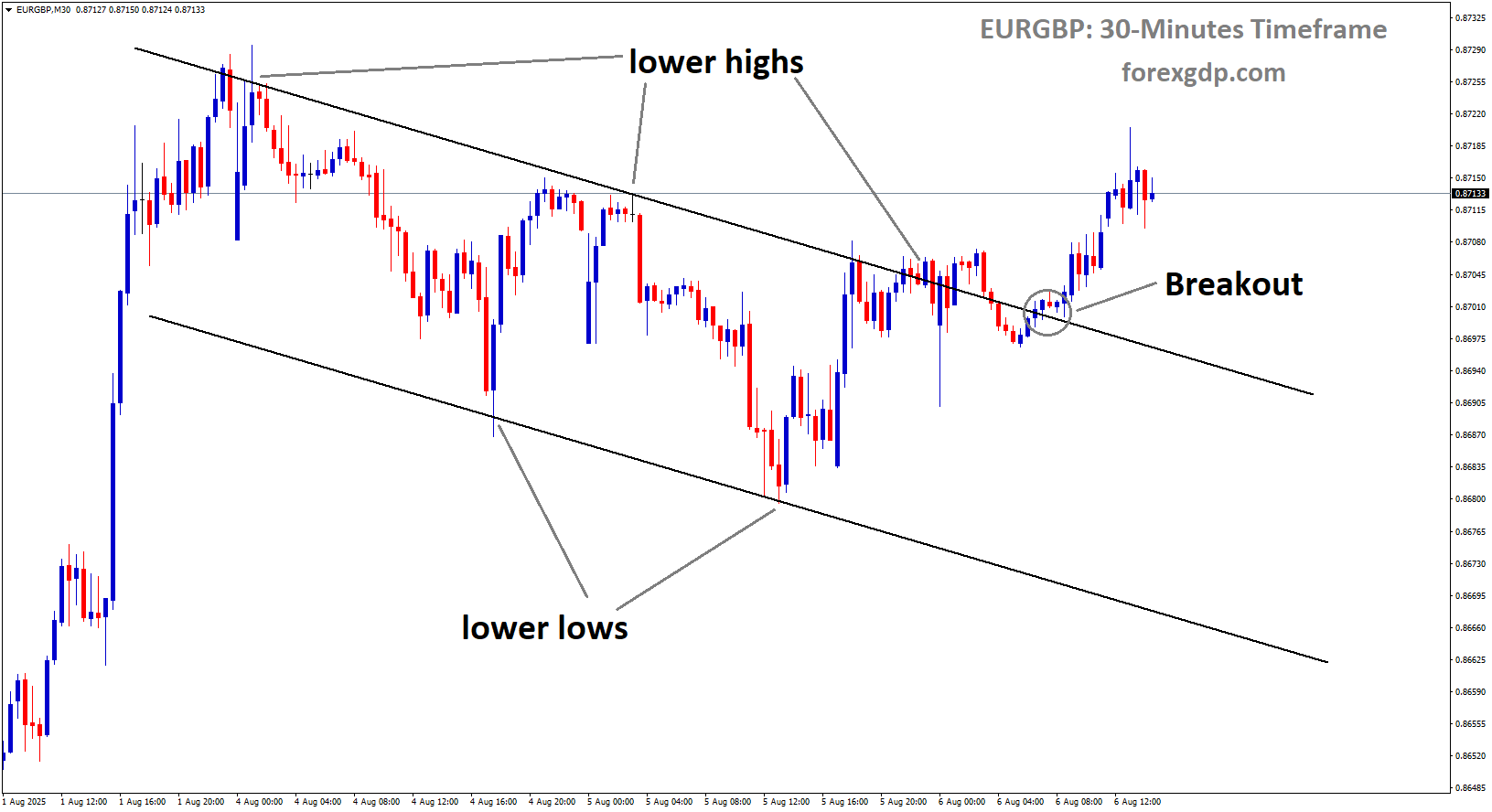
EURGBP has broken the descending channel on the upside
The Euro Takes a Breather as Economic Signals Disappoint
One of the biggest reasons the Euro is struggling right now is the stream of not-so-great economic data coming from the Eurozone. When investors see signs that an economy is slowing down, they often lose a bit of confidence in that region’s currency. That’s exactly what’s happening with the Euro.
Eurozone’s PMI Data Falls Short
A major disappointment came from the latest Purchasing Managers Index (PMI) numbers. These reports give us an idea of how well businesses are doing across the manufacturing and services sectors. The latest figures for July showed that the Eurozone’s overall economic activity isn’t growing as strongly as many had hoped. In fact, the final reading of the Eurozone Composite PMI fell slightly below expectations, suggesting that the region’s economic recovery might be losing steam.
When the services sector—the largest part of most developed economies—also shows weakness, it’s a clear sign that momentum is fading. That puts the Euro in a tough spot because traders and investors are less likely to back a currency linked to slowing growth.
Germany’s Struggles Add to the Pressure
Germany, often seen as the engine of the Eurozone, added to the concern with unexpectedly weak factory orders. This suggests that its industrial sector is still under pressure, which isn’t great news for the broader Eurozone outlook. With factory activity shrinking, confidence in future production and economic strength takes a hit, weighing further on the Euro.
The Pound Gets a Boost as BoE Meeting Approaches
While the Euro has been slipping, the British Pound has been holding up better, and part of that is because of what’s going on with the Bank of England (BoE). Traders are watching the BoE closely as it prepares for its next interest rate decision, which is just around the corner.
Expectations of a Rate Cut in the UK
Most people expect the Bank of England to cut interest rates this week. That might sound like it would weaken the Pound, but the reality is a bit more complicated. Since this rate cut has already been widely predicted, it’s mostly been “priced in” by the markets. That means traders have already adjusted their strategies and expectations in anticipation.
More importantly, the Pound isn’t reacting just to the expected cut. It’s also being influenced by what comes next. Will the BoE hint at more rate cuts? Or will they take a more cautious, wait-and-see approach? If they choose the latter, that could actually help the Pound stay strong or even rise slightly.

Confidence in UK Stability
Compared to the Eurozone, the UK’s economy is showing a bit more stability at the moment. That’s helping the Pound stay resilient. Even with a potential rate cut, if the broader signs from the UK economy are more positive than those coming from the Eurozone, then the Pound might come out on top in this tug-of-war.
Trade Tensions Lurk in the Background
Another piece of the puzzle that’s adding to the uncertainty is the ongoing trade situation between the European Union and the United States. While it hasn’t made headlines lately, it’s still an issue that could erupt again at any time—and when trade disputes flare up, they often hurt the Euro more than the Pound.
Temporary Pause in Trade Retaliations
The EU recently decided to pause its planned countermeasures against the U.S. tariffs for six months. While that gives some breathing room, it doesn’t solve the issue. If talks between the EU and the U.S. break down or if new tariffs are introduced, that could quickly drag down investor confidence in the Euro again.
Trade relationships are a big deal when it comes to currency strength. If investors think Europe’s exporters might suffer from higher tariffs or disrupted supply chains, they’ll be less likely to bet on the Euro.
Looking Ahead: What Could Shift the Balance?
So, what should we be watching for next? While the immediate pressure on the Euro is tied to disappointing economic data, things could still change. If the European Central Bank (ECB) starts hinting that it’s not ready to cut interest rates too quickly, that might give the Euro a bit of a boost. On the flip side, any new signs of economic trouble in Europe—or any major global trade issues—could push it lower.

EURGBP is moving in a box pattern, and the market has rebounded from the support area of the pattern
As for the Pound, its fate depends largely on what the BoE decides and how strong the UK’s economy looks in the coming months. A more cautious BoE could be seen as a vote of confidence in the UK economy, which would support the Pound further. But if the central bank signals concern about growth, or if inflation picks up unexpectedly, that could flip the narrative.
Final Summary: A Battle of Uncertainties
Right now, the EUR/GBP story is all about which economy looks more stable—and which central bank seems more confident. The Euro is under pressure from weaker economic signals and a cautious European Central Bank. Meanwhile, the Pound is finding some strength as the BoE prepares for another rate cut, but with an economy that seems a bit more stable by comparison.
It’s a currency battle where neither side is particularly strong, but the Pound is currently looking a bit more attractive. That could change quickly, though, depending on how the economic data and policy updates unfold over the next few weeks. For now, traders are keeping a close eye on every announcement, trying to gauge who’s got the stronger footing in this shifting economic landscape.
Whether you’re a casual observer or someone actively involved in forex, this is definitely a pairing worth watching closely. The next few moves—both from policymakers and the economies themselves—could tip the balance again in either direction.