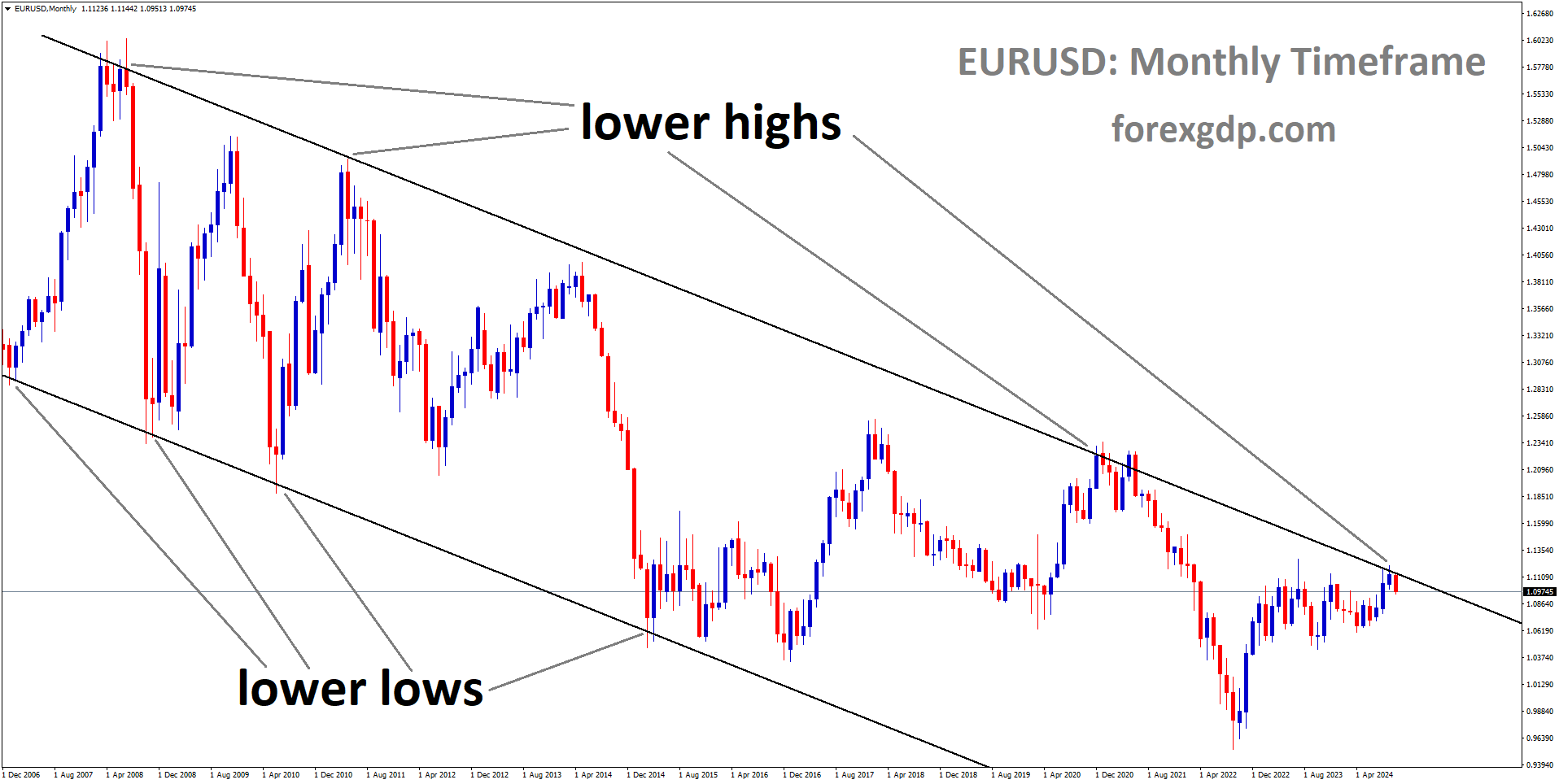
EURUSD is moving in a descending channel
EURUSD lifts from recent lows after France signals political stability
The Euro has been on a downward path for three consecutive days, struggling to regain momentum as political uncertainty in France and a lack of progress in the United States government funding debate continue to weigh heavily on market confidence. Let’s dive deeper into what’s driving this movement and what it could mean going forward.
The Euro’s Struggles Continue
The European currency has been facing a tough time lately. With investors reacting to growing political tensions in France and uncertainty in the United States, the Euro has lost some of its previous strength. Although it managed a small recovery, the overall sentiment around the currency remains cautious.
One of the main reasons for this weakness is the political impasse in France. Tensions have risen around President Emmanuel Macron as calls for new elections increase. Opposition parties and even some of his former allies have pushed for change, creating instability that unsettles investors.
Adding to the concern, rating agencies have warned that France’s sovereign credit rating could be downgraded if the political gridlock continues. Such warnings make investors nervous, and when uncertainty grows, they often pull money out of riskier assets like the Euro and move toward safer ones like the US Dollar.
However, there has been a small sign of relief. France’s former Prime Minister, Sébastien Lecornu, recently assured that there would be a budget before the end of the year and dismissed the idea of new elections. His comments gave the Euro a bit of breathing room, calming market fears for a short while. But as many traders know, temporary reassurances don’t always change the larger trend.
Political Unrest in France: A Major Pressure Point
Mounting Challenges for Macron’s Leadership
President Macron’s government has been under intense pressure from both political rivals and public dissatisfaction. The growing internal divisions within his party have amplified the uncertainty. When a country’s political system appears unstable, it shakes investor confidence — and in turn, its currency feels the impact.
Analysts have noted that Macron’s difficulties are not just about policy differences but also about credibility and leadership perception. Investors are watching to see whether his administration can hold together long enough to pass a national budget and stabilize the political environment.
France’s Economic Sentiment Weakens
Even apart from politics, the economic data coming from France and other parts of the Eurozone hasn’t been encouraging. Industrial activity and manufacturing demand have shown mixed results, reflecting the slow recovery of Europe’s economic engine.

Germany’s factory orders, for instance, dropped again recently — a worrying sign for the broader Eurozone since Germany is its largest economy. These numbers have done little to boost optimism around the Euro’s performance in the near term.
Across the Atlantic: The Dollar Gains on Uncertainty
While Europe deals with its internal troubles, the United States isn’t without its own issues. The ongoing political deadlock in Washington over government funding has caused its own kind of market anxiety. Still, ironically, such uncertainty often helps the Dollar rather than hurts it.
US Government Shutdown Stalemate
The US Congress continues to struggle with finding an agreement to restore government funding. As the shutdown stretches into its second week, confidence in a quick resolution is fading. Investors have started turning to the Dollar as a safe haven, especially as global tensions and economic concerns rise.
A recent poll showed that hopes for a breakthrough in Washington this week are fading fast. This lack of progress has pushed many traders to move away from riskier assets and toward the security of the Dollar. The result? The Euro has been pushed even lower as the Dollar gains ground.
The Fed’s Role in the Background
Beyond politics, the Federal Reserve remains a key player in shaping the Dollar’s path. The market is paying close attention to comments from Fed officials and the minutes from their latest meeting. Diverging opinions among policymakers continue to add an extra layer of uncertainty.
Some Fed members believe that lowering rates too quickly could spark another wave of inflation, while others argue that the economy needs relief to avoid stagnation. These mixed signals keep traders guessing, which often benefits the Dollar when uncertainty prevails.
Central Banks Under the Spotlight
The European Central Bank (ECB) and the Federal Reserve both play major roles in influencing the Euro-Dollar relationship. Lately, ECB President Christine Lagarde has maintained a cautious tone, suggesting that inflation in the Eurozone is largely under control but acknowledging that challenges remain.
Her confidence that France will manage to meet its international commitments and produce a budget in time was meant to calm the markets. However, investors remain skeptical until they see concrete action.
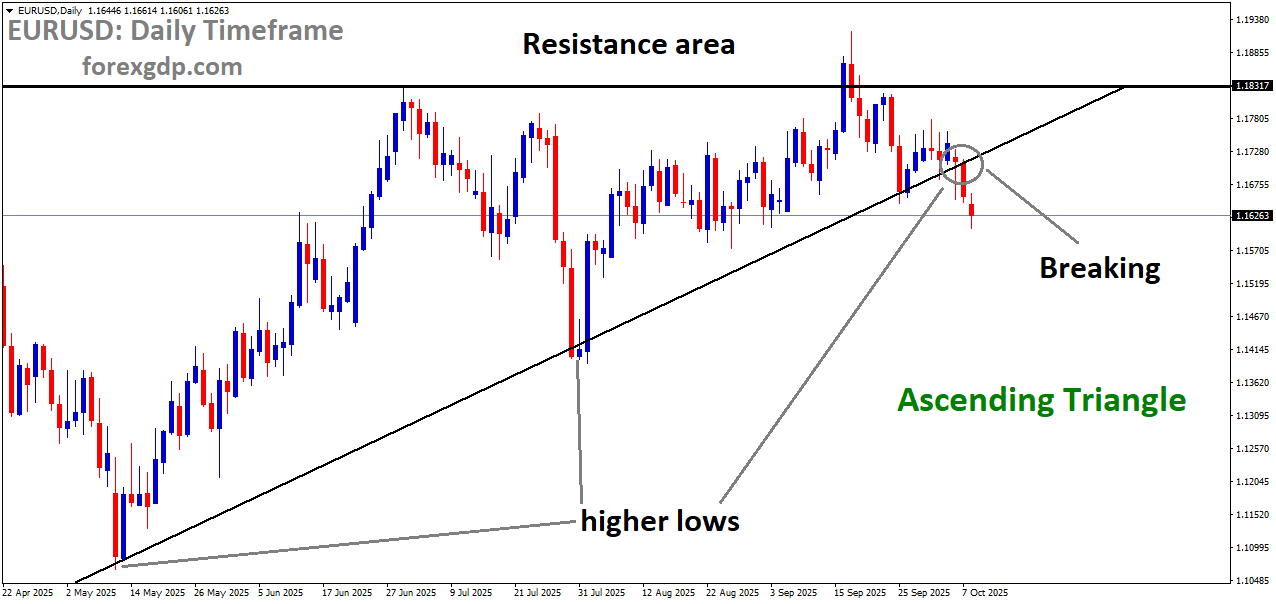
EURUSD is breaking the higher low area of the Ascending triangle pattern
Meanwhile, the Fed’s differing views about the direction of monetary policy have made the US economic outlook somewhat confusing. The lack of clear consensus keeps markets volatile — a situation where the Dollar tends to strengthen due to its status as a global safe haven.
Investor Sentiment and Market Mood
When both sides of the Atlantic face political and economic uncertainties, traders often choose safety over speculation. This is exactly what’s happening right now. Investors are seeking refuge in assets that are traditionally considered secure, such as the US Dollar.
The Euro, on the other hand, continues to face selling pressure. Every new headline from Paris or Washington seems to feed the narrative that volatility is here to stay. Until there’s more stability on either front — whether political or fiscal — the Euro may struggle to find a solid footing.
What’s Next for the Euro?
The short-term outlook for the Euro remains fragile. Political challenges in France, weak economic data from the Eurozone, and the strong pull of the US Dollar all combine to create a tough environment for the European currency.
Traders will be closely watching upcoming speeches from central bank officials and any updates on both the French budget situation and the US government funding negotiations. Even a small sign of resolution could shift sentiment quickly — but until then, the market tone remains cautious.
Final Summary
The Euro’s current weakness is largely driven by political uncertainty in France and the ongoing government funding gridlock in the United States. Investors tend to move toward the safety of the Dollar when global risks rise, leaving the Euro under heavy pressure.
While brief recoveries can happen, the broader trend depends on how soon stability returns to Europe’s political scene and whether the US can resolve its internal disputes. Until then, the Euro may remain on the defensive, caught between domestic challenges and the Dollar’s growing strength.
The coming days will reveal whether policymakers in both regions can restore confidence — because in the world of currency trading, stability is everything.
GBPUSD Under Pressure as Investors Seek Shelter in the US Dollar
The foreign exchange market is witnessing a significant shift as the Pound Sterling weakens against the US Dollar. Despite ongoing economic challenges in the United States, the Dollar is emerging stronger, supported by its safe-haven appeal during uncertain global times. Let’s break down what’s happening and why this movement is catching traders’ attention.
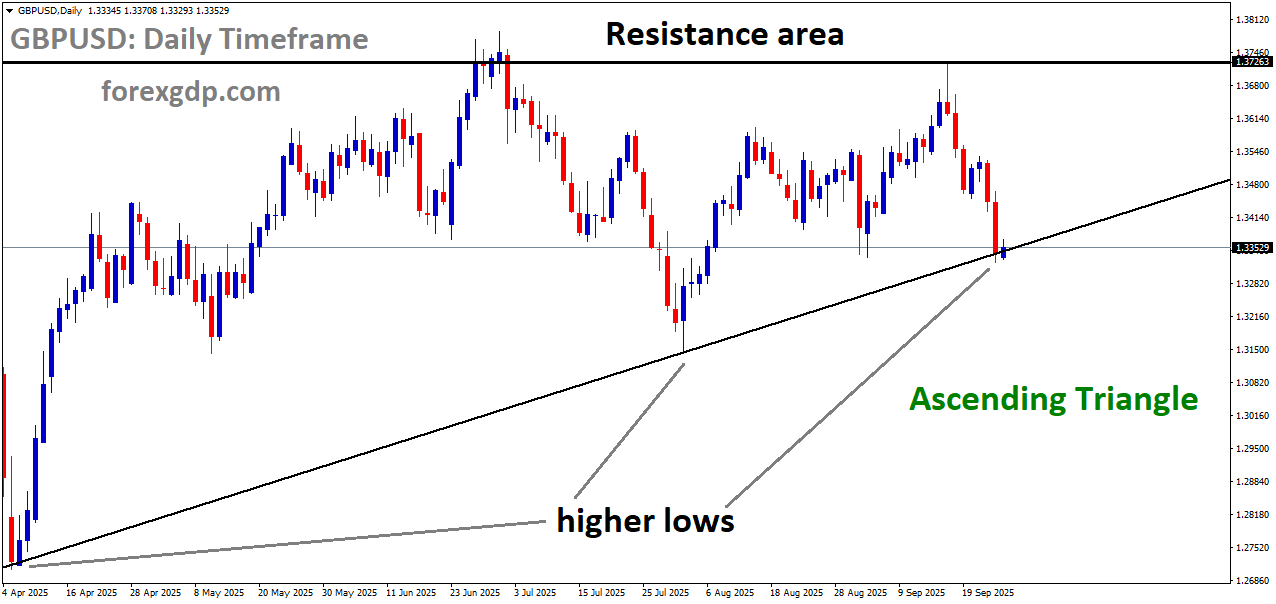
GBPUSD is moving in an Ascending Triangle pattern, and the market has reached the higher low area of the pattern
The Pound Loses Ground Against the Dollar
The Pound Sterling has been under pressure lately, struggling to hold its position against the US Dollar. During the mid-week European trading session, the GBP/USD pair dipped as the Dollar’s strength dominated the market. Investors seemed to favor the Dollar, seeking safety in the world’s reserve currency amid ongoing political and economic turbulence across major economies.
While both the United Kingdom and the United States are facing economic challenges, market sentiment appears to favor the Dollar. Traders often view the US Dollar as a safer bet when uncertainty rises, and this trend has once again proved true.
One major reason behind the recent demand for the Dollar is global political instability. Developments in Japan and France have sparked risk aversion, pushing investors toward assets considered more secure.
Why Investors Are Turning Toward the Dollar
Global Political Tensions Lift the Greenback
Recent political events around the world have strengthened the US Dollar’s position as a safe-haven asset. In Japan, the election of a new conservative leader, Sanae Takaichi, has drawn attention. As the first potential female Prime Minister of Japan, her leadership is expected to bring stability, but her policy stance has lowered expectations for further monetary tightening by the Bank of Japan. That means investors might see slower policy adjustments, which in turn influences capital flows.
Meanwhile, France is dealing with its own political crisis after the unexpected resignation of its Prime Minister, Sebastien Lecornu. This has raised fresh concerns about the stability of the French government and its ability to manage ongoing economic issues. As uncertainty rises in major economies, global investors tend to move their funds into the US Dollar, boosting its strength.
The US Government Shutdown Adds Complexity
Domestically, the United States is grappling with a government shutdown that has entered its second week. Normally, such a situation would weaken the Dollar due to concerns about the economy and potential delays in public spending. However, in this case, the global demand for safety has outweighed domestic concerns.
President Donald Trump’s announcement about possible cuts to federal welfare programs and layoffs in government agencies has added another layer of uncertainty. Still, traders remain focused on the broader picture — and the Dollar continues to benefit from its reputation as the world’s most reliable currency during crises.
The Pound Sterling’s Struggle for Direction
Monetary Policy Uncertainty in the UK
On the other side of the Atlantic, the British Pound is facing its own set of challenges. The Bank of England (BoE) is stuck between two difficult choices — controlling inflation or supporting economic growth. Inflation in the UK remains stubbornly high, even as job growth slows down, leaving policymakers with limited options.
In the previous BoE meeting, interest rates were kept unchanged, signaling a cautious stance. The central bank has maintained a “gradual and careful” approach toward monetary easing. This means they are in no rush to either cut or raise rates too aggressively. Investors are now waiting for upcoming statements from BoE Chief Economist Huw Pill, hoping for hints about future policy directions.

Market Expectations Remain Muted
Most analysts expect the Pound to trade sideways until clearer guidance emerges from the BoE. The uncertainty surrounding the bank’s next moves has made investors hesitant to take big positions in the British currency. Even small policy hints or economic updates can have an outsized impact on GBP/USD movements right now.
Focus Shifts to the Federal Reserve’s Outlook
Another key factor shaping the Dollar’s performance is the upcoming release of the Federal Open Market Committee (FOMC) minutes. These records from the Fed’s last meeting will provide insight into why the central bank decided to cut interest rates earlier this year and what it plans next.
The recent rate cut — the first of the year — has reignited discussions about how far the Fed might go in supporting the economy. The central bank’s projections suggest that more cuts could be on the horizon before year-end. Traders are already pricing in at least two additional rate reductions in upcoming meetings.
This has led to an interesting dynamic: even though interest rates are being lowered, the Dollar remains strong because global investors continue to see it as the safest currency to hold during uncertain times.
What It Means for Traders and Investors
Short-Term Volatility Expected
In the near term, both GBP and USD are expected to remain volatile. While the US government shutdown might eventually create headwinds for the Dollar, the ongoing geopolitical tension and strong investor sentiment are likely to keep the Greenback supported.
For the Pound, traders will continue monitoring economic data and central bank speeches. If the BoE signals any change in its cautious stance, the Pound could either recover or weaken further, depending on the tone of the announcement.
Long-Term Outlook
Over the long run, much will depend on how both economies navigate their domestic challenges. The UK’s persistent inflation problem and slowing job market remain significant hurdles. Meanwhile, the US faces potential economic slowdown risks if the shutdown continues and federal spending is delayed.
Nonetheless, the broader market trend continues to favor the Dollar, at least until political stability improves in other major economies.
Final Summary
The recent weakness in the Pound Sterling against the US Dollar highlights how quickly market sentiment can shift when uncertainty rises. Despite domestic concerns in the US, the Dollar continues to benefit from global risk aversion. Political events in Japan and France have reminded investors of how fragile global stability can be, prompting a renewed rush toward safer assets.
The Bank of England’s cautious stance and unclear outlook on interest rates have left the Pound struggling to gain momentum. Meanwhile, the Federal Reserve’s upcoming meeting minutes will likely guide expectations for future monetary policy in the United States.
For now, traders and investors should stay alert. Market conditions remain sensitive, and any new development — whether political or economic — could quickly change the direction of the Pound and the Dollar. In times like these, patience and careful observation are often the best strategies.
USDJPY extends gains with Yen under pressure from Japan’s new policy outlook
The Japanese Yen has been facing a tough time lately, staying weak against the US Dollar. As traders keep a close eye on Japan’s political changes and global financial cues, the Yen continues to slide. One major factor behind this fall is growing speculation about Japan’s future economic direction under Sanae Takaichi, who recently made headlines as Japan’s first female Prime Minister.
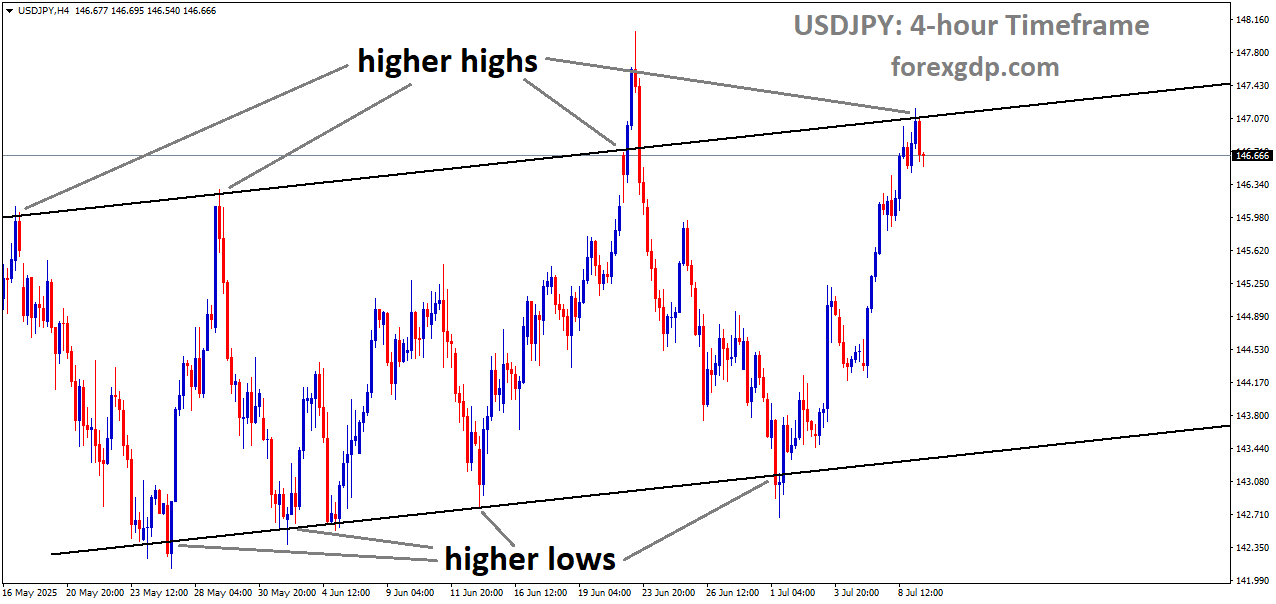
USDJPY is moving in an Ascending channel, and the market has reached a higher high area of the channel
Investors believe that Takaichi’s economic policies could involve more government spending to support growth, which might slow down the Bank of Japan’s (BoJ) plans to raise interest rates. In simple terms, when the government spends more to boost the economy, the central bank often keeps interest rates low to avoid hurting growth. This has caused traders to expect a delay in BoJ’s monetary tightening — keeping the Yen on the weaker side.
Adding to this sentiment, Takuji Aida, one of Takaichi’s close economic advisers, commented that raising interest rates too soon would be a mistake. According to him, the BoJ might only consider another rate hike early next year if the economy remains stable. These remarks have added more pressure on the Yen, which has already been losing strength since the start of the week.
US Dollar Finds Strength Amid Mixed Economic Signals
While the Yen continues to fall, the US Dollar has been holding firm despite some uncertainties surrounding the American economy. Traders are now expecting the Federal Reserve to cut interest rates twice more this year, yet the Dollar remains surprisingly resilient. Usually, rate cuts make a currency weaker, but in this case, the USD seems to be benefiting from its safe-haven appeal — investors tend to flock to it when uncertainty grows elsewhere.
On top of that, the ongoing US government shutdown has added another layer of uncertainty to the markets. The political standoff between Republicans and Democrats has raised concerns about potential impacts on the economy, particularly if it drags on. Still, the Dollar has not shown much weakness, suggesting that investors believe the US economy is strong enough to weather temporary political chaos.
This mix of strength in the Dollar and weakness in the Yen has pushed the USD/JPY pair to its highest level since February, showing just how much the two currencies have diverged in recent months.
How Japan’s Political Shift Shapes Market Expectations
A New Leadership Brings a New Direction
Sanae Takaichi’s surprise victory in Japan’s ruling Liberal Democratic Party (LDP) leadership race has changed the market’s outlook dramatically. Her policies, seen as more supportive of government spending, are expected to focus on economic recovery rather than aggressive inflation control. This shift means that the BoJ may have to move more cautiously when it comes to raising rates.
Traders have quickly responded to this development, scaling back their earlier expectations that the BoJ would raise interest rates soon. As a result, the Japanese Yen has continued to weaken for the third consecutive day, reflecting a lack of confidence in short-term policy tightening.
Japan’s Economic Health Still Appears Strong
Interestingly, Japan’s economy is not in bad shape. Inflation has been staying around the BoJ’s 2% target for over three years — a big improvement from the deflationary struggles that haunted Japan for decades. The country’s economy also grew for the fifth straight quarter, showing consistent progress. Despite this, the central bank remains cautious, not wanting to tighten monetary policy too fast and risk slowing down this steady growth.

Some members of the BoJ board have already expressed concern that inflation might stay high for longer, but the leadership seems to prefer patience. Aida, the prime minister’s adviser, hinted that another small rate hike in January could happen, but beyond that, there might not be further hikes until at least 2027. For traders, this indicates that Japan’s interest rates will likely remain low for quite a while — keeping the Yen under pressure.
The Global Tug-of-War: BoJ vs. Fed Outlook
Contrasting Paths Between Japan and the US
One of the biggest reasons behind the USD/JPY’s recent moves is the sharp contrast between Japan and the US in terms of monetary policy direction. The BoJ is being patient and cautious, while the US Federal Reserve seems to be preparing for possible rate cuts later this year. Normally, this difference could have weakened the Dollar, but global investors see things differently this time.
The US economy, despite rate cut expectations and political drama, continues to show resilience. This gives traders confidence that the Dollar will remain a strong currency in the near term. On the other hand, Japan’s low-yield environment makes the Yen less attractive for investors looking for returns. As a result, the USD/JPY pair keeps rising as more traders prefer holding Dollars instead of Yen.
Political and Economic Uncertainty Keeps Markets on Edge
In the United States, the government shutdown saga continues into its second week. The lack of progress between lawmakers has sparked fears that the closure could hurt federal workers and slow economic activity. However, for now, investors seem more focused on upcoming US economic data and the Federal Reserve’s next moves.
The FOMC (Federal Open Market Committee) meeting minutes are due for release soon, and they are expected to provide insights into the Fed’s thinking about future rate decisions. Any sign of a dovish tone — meaning the Fed leaning toward rate cuts — could shake up the USD/JPY pair again. Traders will also be paying close attention to Fed Chair Jerome Powell’s upcoming remarks, which might offer clues about the central bank’s stance going forward.
What Traders Are Watching Next
Market participants are now waiting for fresh signals before making their next big moves. The FOMC minutes and Powell’s speech will be key events this week, shaping the short-term direction of both the Dollar and the Yen. For now, the overall sentiment favors the USD, while the JPY remains weighed down by uncertainty about Japan’s policy path.
If the BoJ delays any further rate hikes and Takaichi’s administration focuses on fiscal expansion, the Yen could remain weak for months. On the other hand, if the US economy starts showing cracks due to the prolonged government shutdown or slower growth, the Dollar might finally lose some strength — giving the Yen a chance to recover slightly.
Final Summary
The Japanese Yen’s current weakness reflects a mix of political change, policy uncertainty, and global economic contrasts. With Sanae Takaichi taking leadership in Japan and signaling more spending, the Bank of Japan may have little room to tighten its policy soon. Meanwhile, the US Dollar continues to defy expectations by staying strong, supported by investor confidence and economic resilience despite political challenges.
As traders look ahead to new data and central bank signals, one thing is clear — the USD/JPY pair remains one of the most closely watched currency combinations in global markets. The tug-of-war between Japan’s cautious monetary stance and America’s resilient financial environment will likely keep driving the conversation for weeks to come.
EURGBP edges down as Germany’s industrial slump pressures the Euro
The Euro to British Pound (EUR/GBP) pair has been under pressure lately, showing signs of weakness as both the Eurozone and the United Kingdom face shifting economic conditions. With Germany’s industrial sector stumbling and the Bank of England (BoE) hinting at a possible rate cut, the market dynamics between these two currencies are becoming increasingly interesting. Let’s break down what’s really going on and why traders are paying close attention to these developments.
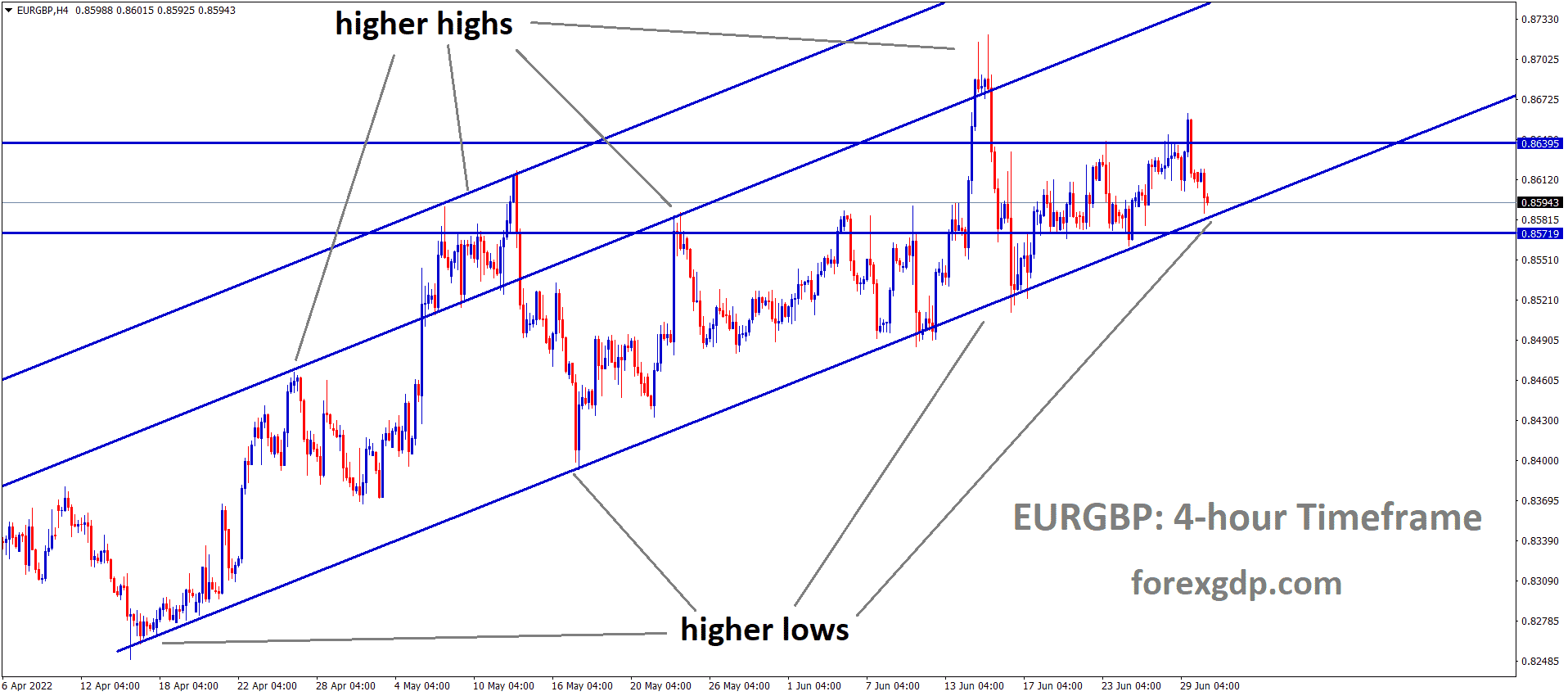
EURGBP is moving in an Ascending channel, and the market has reached the higher low area of the channel
Germany’s Economic Slowdown Adds Pressure on the Euro
Germany, often considered the backbone of Europe’s economy, has hit another rough patch. The latest industrial production data showed a sharp monthly drop of 4.3% in August compared to July’s slight rise. On a yearly basis, production also fell by nearly 4%, marking one of the steepest declines seen this year. These figures paint a worrying picture for the Eurozone’s largest economy.
Industrial production is a crucial indicator of economic health—it tells us how much the factories and industries are producing. When this number drops sharply, it usually means businesses are scaling back due to weaker demand or higher costs. For Germany, which relies heavily on exports and manufacturing, this decline could signal that global demand is cooling or that domestic challenges—like high energy costs—are weighing on output.
Adding to that, Germany’s slowdown doesn’t just affect the country itself. It has a ripple effect across the entire Eurozone because Germany’s economy is tightly connected with its European neighbors. When German factories produce less, other European suppliers and trading partners also feel the pinch. This is one reason why the Euro has struggled to stay strong against the British Pound lately.
ECB Sticks to Its Policy but Faces Tough Choices Ahead
Amid this weak data, Joachim Nagel, the President of the German Bundesbank and a policymaker at the European Central Bank (ECB), stated that the ECB’s current monetary stance is appropriate. He emphasized that inflation across the Eurozone is now close to the bank’s medium-term target of 2%, which suggests that drastic policy moves may not be necessary in the near term.
However, this stability may not last long. The ECB faces a difficult balancing act—on one hand, inflation has been cooling, but on the other, the region’s economic growth remains fragile. The central bank must decide whether to maintain its cautious stance or adjust policy to prevent a deeper slowdown.
Nagel’s remarks suggest that the ECB wants to stay steady for now. Still, if Germany and other key Eurozone economies continue to report weak data, the pressure to shift toward more supportive measures could grow. The Euro could remain subdued if markets begin to price in the possibility of future rate cuts from the ECB.
Political Uncertainty in France Adds to the Euro’s Troubles
While economic factors weigh on the Euro, political instability in France—Europe’s second-largest economy—has added another layer of concern. The recent resignation of Prime Minister Sebastien Lecornu has raised questions about the country’s ability to pass its 2026 fiscal budget smoothly. France’s political challenges make it difficult for investors to have confidence in the region’s fiscal direction.
When politics get messy, markets often react with caution. Investors usually pull back from riskier assets like the Euro and look for more stable alternatives. This lack of confidence can lead to more downward pressure on the EUR/GBP pair. In essence, both economic weakness in Germany and political tension in France are creating a double blow for the Euro.
Why the British Pound Isn’t Having It Easy Either
Although the Pound has gained some ground against the Euro recently, it’s not all good news for the UK either. The British economy is dealing with its own set of problems. Expectations are rising that the Bank of England (BoE) might cut interest rates before the end of the year.

When markets expect lower interest rates, the currency often weakens because investors earn less from holding it. The BoE’s cautious tone stems from concerns about the UK’s slowing labor market. A recent BoE survey suggested that most businesses expect to keep employment levels steady over the next year, rather than increase hiring. That’s a sign that companies are being careful amid uncertainty.
On top of that, the UK’s growth outlook remains muted. The economy has shown only modest signs of improvement, and consumers continue to face cost-of-living pressures. The central bank is trying to find the right balance between keeping inflation under control and avoiding a deeper slowdown. If the BoE indeed moves toward a rate cut, the Pound could lose some of its recent strength.
The EUR/GBP Tug of War: What Traders Are Watching
The EUR/GBP pair is caught in a delicate tug of war between weak Eurozone fundamentals and the UK’s dovish monetary outlook. On one side, the Euro faces downward pressure due to poor industrial data and political instability. On the other, the Pound struggles with rate cut speculation and sluggish domestic growth.
What makes this pair particularly interesting is that neither currency has a clear advantage at the moment. Both economies are showing signs of fatigue, and both central banks are likely to adopt cautious approaches going forward. Traders and investors are keeping a close eye on upcoming economic reports, central bank speeches, and any signs of improvement in labor markets or inflation trends.
For now, the pair is expected to move within a relatively narrow range as both sides weigh their respective challenges. However, a major policy announcement or a sudden shift in sentiment could easily change that balance.
What Could Come Next for the Euro and the Pound
Looking ahead, the next few months will be crucial in determining the direction of the EUR/GBP exchange rate. Here are a few key things to watch:
1. Eurozone Economic Data
If Germany or other major Eurozone economies continue to show weak performance, it could push the ECB to rethink its current stance. A significant downturn might even revive discussions about rate cuts or additional stimulus measures.
2. Bank of England Policy Moves
If the BoE signals that a rate cut is likely this year, the Pound could weaken further. However, if inflation proves to be more persistent than expected, policymakers might hold off, which could lend some support to the GBP.
3. Political Developments in France and the UK
Political uncertainty often makes investors nervous. Any new developments in France’s government or potential fiscal debates in the UK could sway market sentiment and impact both currencies.
Final Summary
In short, the EUR/GBP pair is under the influence of both economic and political headwinds. Germany’s industrial slowdown has dampened optimism for the Euro, while political instability in France adds further pressure. Meanwhile, the British Pound faces its own hurdles, with speculation of a BoE rate cut clouding its outlook.
This mix of uncertainty on both sides means that EUR/GBP could remain volatile in the near term. Traders and investors will likely keep a close eye on upcoming economic releases, central bank comments, and political news. While neither the Euro nor the Pound seems poised for a strong rally right now, the balance could quickly shift if one economy begins to recover faster than the other. For now, patience and close observation remain key in navigating this dynamic currency pair.
AUDUSD Weakens Further While the US Dollar Dominates Global Markets
The AUD/USD currency pair has been under pressure recently, moving lower as the U.S. Dollar continues to strengthen against major global currencies. The pair is hovering near a recent low, reflecting how investor sentiment remains cautious amid global economic uncertainty. While the American currency keeps gaining ground, several key factors—from the U.S. government’s ongoing shutdown to Australia’s inflation expectations—are influencing the next potential move for this pair.
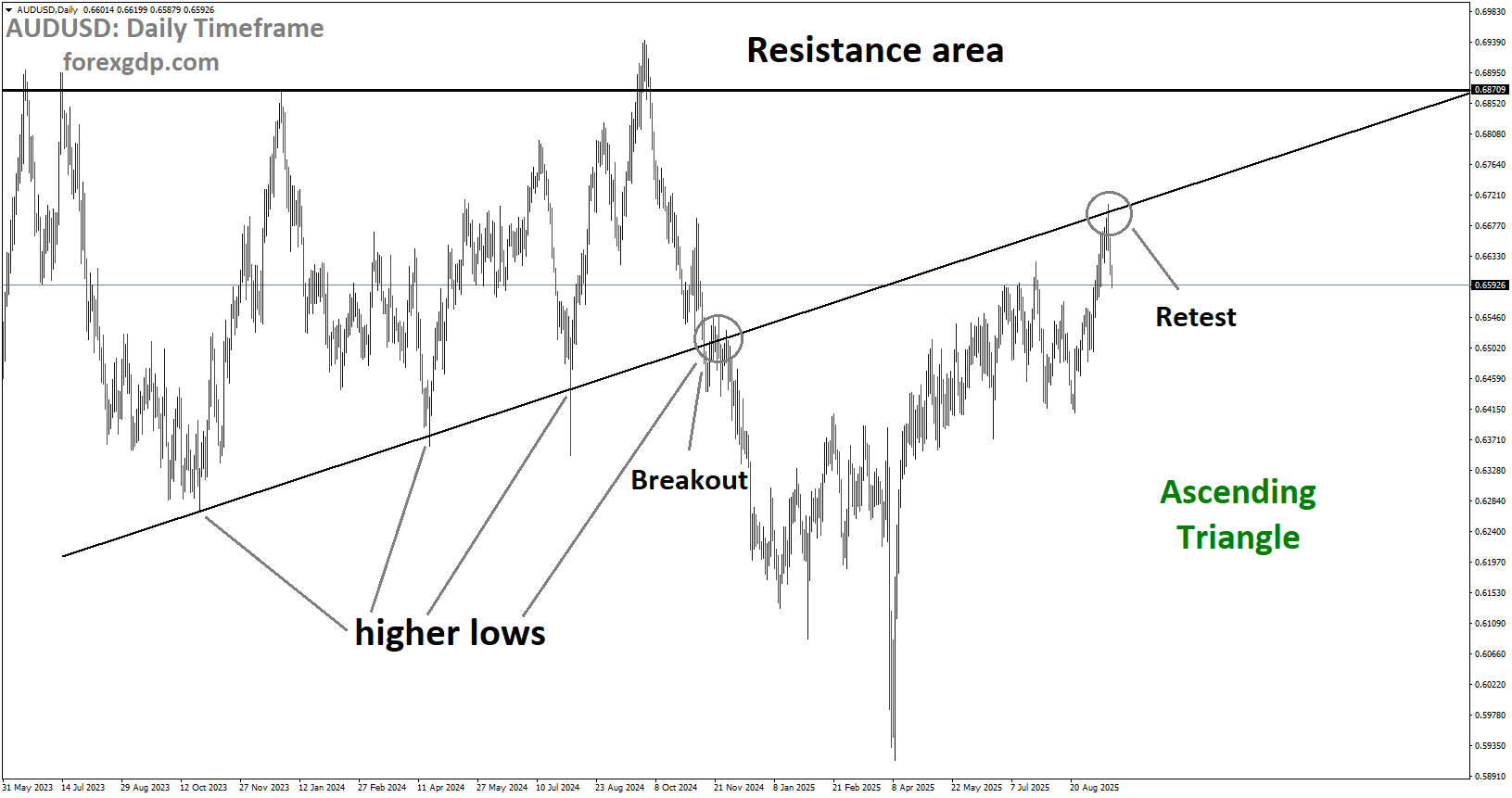
AUDUSD is falling from the retest area of the broken Ascending Triangle pattern
Let’s break down the current market mood and what traders should keep an eye on in the coming days.
The U.S. Dollar’s Strong Grip On Global Markets
The U.S. Dollar has continued to outperform its peers in recent sessions, attracting investors seeking stability during uncertain times. Global traders often view the Greenback as a safe-haven currency, especially when markets face political or economic turbulence.
Currently, the U.S. Dollar Index (DXY), which measures the dollar’s strength against a basket of major currencies, has reached its highest level in months. This surge reflects investor confidence in the U.S. economy’s resilience, even though there are ongoing domestic challenges like the government shutdown.
Impact of the U.S. Government Shutdown
The U.S. government’s extended shutdown, now stretching into its second week, has added a new layer of uncertainty to global financial markets. A prolonged shutdown can slow down economic activity, delay government services, and affect investor sentiment. However, paradoxically, it can also boost the U.S. Dollar temporarily as traders flock to safer assets amid the uncertainty.
That said, the longer the shutdown continues, the more it could harm the overall economic outlook. Markets are already questioning whether this situation might influence the Federal Reserve’s decisions in upcoming policy meetings.
All Eyes On The Federal Reserve And FOMC Minutes
The Federal Open Market Committee (FOMC) plays a critical role in shaping U.S. monetary policy. Investors are closely awaiting the release of the FOMC meeting minutes, which will offer insights into the Federal Reserve’s future plans regarding interest rates.
During the last meeting, the Fed made a modest interest rate cut, showing its cautious approach to balancing inflation control with economic growth. Market participants are curious to see whether Fed officials hinted at further rate cuts in the upcoming months or whether they plan to maintain the current pace.
Why The FOMC Minutes Matter
FOMC minutes often reveal the tone and direction of policymakers’ discussions. Even subtle language shifts can send strong signals to traders about future interest rate decisions. For instance, any indication that the Fed might pause its rate-cutting cycle could strengthen the U.S. Dollar even more, while dovish comments might give a short-term boost to risk-sensitive currencies like the Australian Dollar.

At the moment, many analysts believe that the Federal Reserve is walking a fine line—trying to ease financial conditions without reigniting inflation pressures. Traders expect two more minor rate cuts this year, though much depends on upcoming economic data.
Australia’s Economic Outlook And Inflation Expectations
While the U.S. story dominates global headlines, Australia’s domestic outlook also plays a major role in shaping the AUD/USD pair’s movement. The next big data point for Aussie traders is the Consumer Inflation Expectations report, which is set to be released soon.
This report measures how households expect prices to change over the next 12 months. Higher inflation expectations could signal growing price pressures, influencing how the Reserve Bank of Australia (RBA) approaches its future interest rate decisions.
Why Inflation Expectations Are Crucial For The RBA
The RBA closely monitors inflation expectations because they often determine consumer behavior. If people expect prices to rise quickly, they tend to spend more, which can fuel inflation even further. Conversely, lower expectations can slow down spending and economic growth.
Recent data showed a rise in Australia’s 12-month inflation expectations, suggesting that price pressures remain persistent. This has sparked discussions about whether the RBA might consider tightening monetary policy again in the coming months to control inflation.
However, with global uncertainty and slowing growth in major economies like China (a key trading partner for Australia), the central bank is expected to act cautiously.
Global Factors Adding To The Pressure
Beyond the U.S. and Australia, global economic conditions are also shaping the AUD/USD trend. Factors such as geopolitical developments, trade dynamics, and shifts in investor risk appetite have all influenced the recent moves in currency markets.
-
Political developments in Japan and France have also impacted global investor sentiment, indirectly supporting the U.S. Dollar as traders seek safe assets.
-
Commodity price fluctuations play a key role for the Australian Dollar, given the country’s heavy reliance on exports like iron ore, coal, and natural gas. When commodity demand weakens, the Aussie currency often follows.
Together, these global dynamics create a complex environment where even small policy statements or news headlines can move the market significantly.
What Traders Are Watching Next
Looking ahead, traders are keeping their focus on three main factors:
-
FOMC Meeting Minutes: Any shift in tone regarding the Fed’s future rate plans could spark volatility in the AUD/USD pair.
-
U.S. Political Developments: Prolonged government shutdown concerns may impact market confidence and safe-haven flows.
-
Australia’s Inflation Data: Stronger-than-expected numbers could support the Australian Dollar, while weaker figures might drag it lower.
Investors are also staying cautious before taking major positions, preferring to wait for clearer signals from both sides of the Pacific.
Final Summary
The AUD/USD pair continues to face downward pressure as the U.S. Dollar dominates global currency markets. The extended U.S. government shutdown, coupled with anticipation surrounding the FOMC minutes, has kept investors on edge. Meanwhile, Australia’s upcoming inflation expectations data could play a decisive role in shaping the next move for the Aussie.
In simple terms, this is a battle between two key forces: the U.S. Dollar’s safe-haven strength and the Australian economy’s resilience. As long as global uncertainty lingers, the Greenback may hold the upper hand. However, any surprising policy signals from the Fed or the RBA could quickly shift the balance.
For now, traders are watching and waiting—knowing that the next few days of data and political developments could define the short-term direction of AUD/USD.