EURUSD is moving in an Ascending channel, and the market has reached the higher low area of the channel
EURUSD Weakens as Investors React to German Economic Concerns
The euro has been facing increasing pressure as weak business sentiment in Germany and a cautious outlook from the U.S. Federal Reserve create a challenging environment for the common currency. At the same time, investors are showing greater interest in the U.S. dollar, which continues to benefit from its safe-haven appeal during times of uncertainty. Let’s break down what’s happening and why these developments matter.
Why the Euro Is Losing Ground
The euro has been on a downward trend, and much of this weakness can be traced back to concerns over the health of the German economy. Germany is the largest economy in the eurozone, so when its performance falters, the entire region feels the impact.
Recently, the German IFO Business Climate Index revealed that companies are becoming more pessimistic. Businesses reported a worse outlook for the near future and described current conditions as weaker than in previous months. This decline in confidence suggests that companies are struggling with higher costs, softer demand, and growing uncertainty about global trade and growth.
When businesses in a powerhouse like Germany lose faith in the economic environment, it creates ripple effects across the eurozone. Investors start worrying that slower growth in Germany will drag down other countries in the region. As a result, the euro becomes less attractive compared to currencies seen as more stable—most notably, the U.S. dollar.
The U.S. Dollar’s Safe-Haven Advantage
While the euro stumbles, the U.S. dollar is gaining ground. Investors often view the dollar as a safe-haven asset during times of uncertainty, and right now, there’s no shortage of global risks. Concerns about slowing growth, trade tensions, and inflation pressures have led many traders to move toward the dollar for stability.
Adding to this dynamic, recent U.S. data has shown mixed but generally resilient economic conditions. The Purchasing Managers Index (PMI) reports suggest that business activity in the U.S. is slowing but still holding up better than in many parts of Europe. Companies in the U.S. are struggling with rising costs due to tariffs and inflation, yet they remain more competitive compared to their European counterparts.
Moreover, the Federal Reserve’s cautious stance has played a big role in shaping investor sentiment. Fed Chair Jerome Powell recently emphasized the difficulty of balancing inflation risks with the need to protect the labor market. He stopped short of promising more interest rate cuts, which sent a message that the Fed will not rush into aggressive easing. This careful approach reassures investors that the U.S. economy remains relatively strong, further boosting the dollar’s position.

Weak European Data Adds Pressure
Germany isn’t the only country showing signs of strain. Across the eurozone, key indicators are pointing toward slower momentum. The Manufacturing PMI has dipped below expectations in both Germany and France, signaling contraction in this sector. Meanwhile, service activity has been inconsistent, with some improvements but still failing to spark optimism.
In France, for example, the manufacturing sector recorded its weakest performance in three months. The services sector also contracted more sharply than expected, highlighting the uneven nature of the recovery in Europe. These figures underline the challenges that European businesses face: sluggish demand, higher costs, and limited ability to raise prices.
This stream of disappointing data is feeding into investor concerns about whether the eurozone is headed toward a more prolonged slowdown. And every piece of weak data seems to strengthen the case for the dollar as the safer bet.
What Investors Are Watching Next
The immediate focus for many traders has shifted to U.S. housing data and speeches from Federal Reserve officials. For instance, the release of New Home Sales figures and comments from policymakers like San Francisco Fed President Mary Daly are closely monitored. These insights can shape expectations about the direction of monetary policy and, in turn, influence demand for the dollar.
In Europe, investors will continue watching for signs of recovery or further deterioration in business sentiment and economic activity. Any improvement in services or manufacturing figures could offer temporary support to the euro, but the broader trend currently favors the dollar.
Risk Aversion: The Big Picture
Behind all these numbers and reports lies a larger theme: risk aversion. When investors sense instability, whether it’s due to weak data, policy uncertainty, or global economic concerns, they tend to pull money away from riskier assets. In this environment, the euro is viewed as vulnerable, while the U.S. dollar benefits from its global reserve currency status.
The euro’s weakness is not only a reflection of Europe’s economic struggles but also a signal that investors are becoming more cautious overall. Until confidence returns in Europe’s economic outlook, the euro may continue to face downward pressure.
Final Summary
The euro is under pressure as weak business confidence in Germany and disappointing economic data across Europe weigh heavily on the currency. Meanwhile, the U.S. dollar is gaining strength thanks to its safe-haven appeal, mixed but stable U.S. data, and the Federal Reserve’s careful policy stance.
Germany’s role as the economic engine of the eurozone makes its slowdown especially concerning, and investors are watching closely to see if conditions improve or worsen in the coming months. For now, the cautious mood in financial markets favors the dollar, while the euro struggles to find solid ground.
GBPUSD Struggles with Sluggish UK Market Performance
When it comes to the global currency market, even a single statement from policymakers can shift the momentum. That’s exactly what happened recently with the Pound Sterling against the US Dollar. Both the Federal Reserve in the US and the Bank of England in the UK are sending mixed signals, leaving traders and investors trying to make sense of the bigger picture. Let’s break down what’s really happening, why the Pound is losing ground, and what might lie ahead.
The Fed’s Balancing Act: Inflation vs. Jobs
One of the main reasons the US Dollar has regained strength is the cautious tone set by Federal Reserve Chair Jerome Powell. He made it clear that cutting interest rates too quickly could be risky.
Powell explained that inflation risks are still tilted to the upside, while employment faces pressure on the downside. In simple terms, that means prices are still rising faster than the Fed would like, but at the same time, the job market is showing cracks. This creates a tough situation for the central bank—ease policy too much and inflation could climb again, but keep policy too tight and the job market could weaken further.
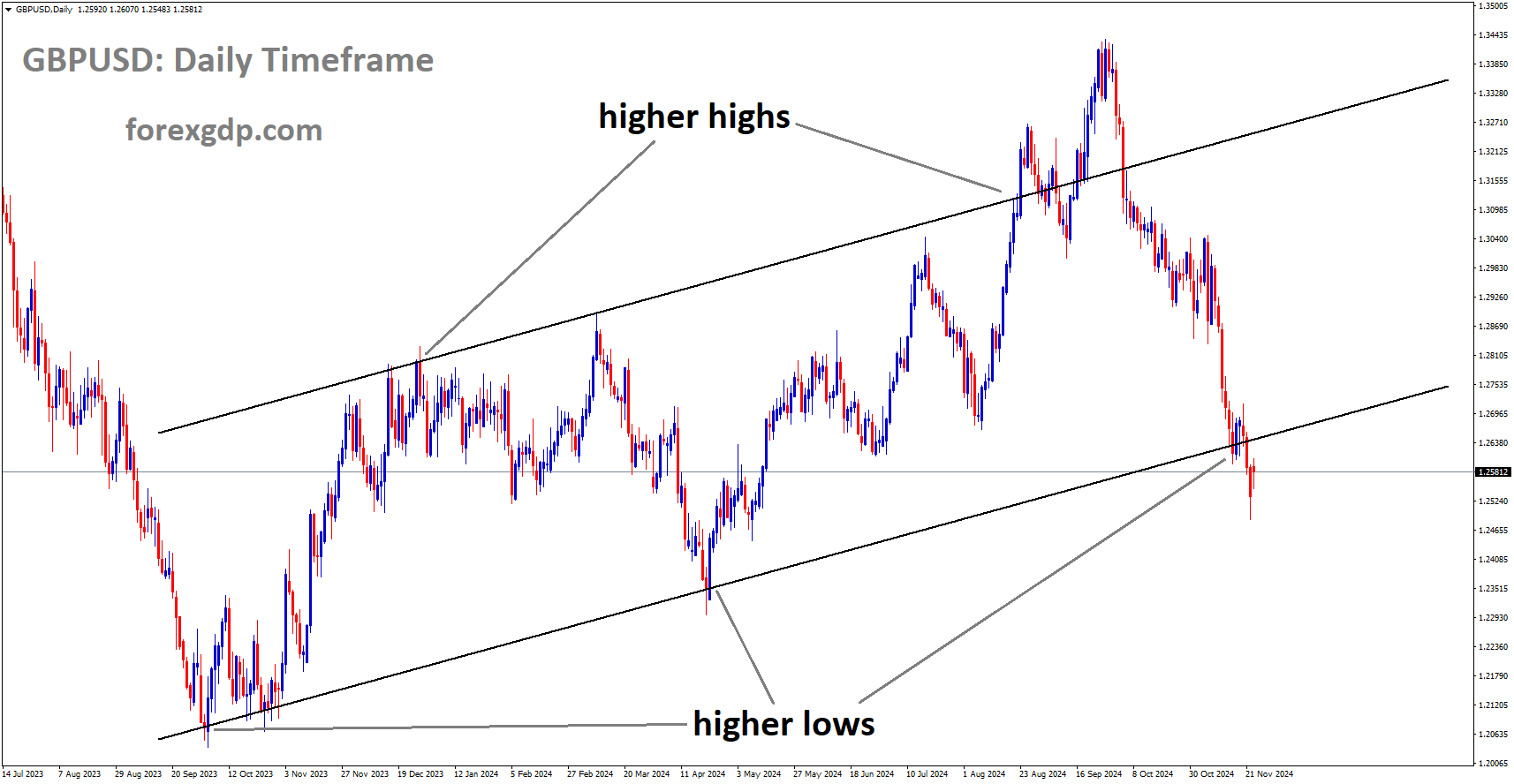
GBPUSD is moving in an uptrend channel
Interestingly, not everyone in the Fed agrees with Powell’s careful stance. Governor Michelle Bowman urged quicker rate cuts, warning that weak demand could soon push businesses into laying off workers. Her remarks highlighted the split within the Fed and added to the uncertainty around the US Dollar’s direction.
UK Business Growth Shows Signs of Cooling
While the Fed debates its next move, the UK economy is also sending worrying signals. Recent data from the country’s business activity surveys suggests that growth momentum is fading.
The PMI Snapshot
The Purchasing Managers’ Index (PMI), which tracks activity in both the services and manufacturing sectors, showed a slowdown in September. The composite PMI landed lower than expected, pointing to slower expansion. Manufacturing, in particular, contracted further, while services growth eased compared to previous months.
This isn’t just a set of numbers—it reflects what’s really happening on the ground. Factories are struggling, services are expanding at a weaker pace, and businesses are feeling the impact of weaker global demand. On top of that, job losses and declining overseas orders add to the pressure.
The Bank of England’s Dilemma
The Bank of England (BoE) is stuck in a difficult position. Inflation in the UK is still well above the 2% target, but growth is slowing, and job market conditions are softening. The central bank recently kept its interest rate steady, sticking to a “gradual and careful” approach toward easing policy.

Officials have suggested that inflation may start cooling soon, possibly peaking around 4% in September. Chief Economist Huw Pill even expressed optimism that price pressures will ease. Still, with the economy losing momentum, the BoE might be forced to shift to a more dovish stance sooner than expected.
Why the Pound Sterling is Losing Ground
So why is the Pound under pressure against the Dollar? The answer lies in the combination of strong US data and weaker UK growth.
-
Fed Caution Strengthens the Dollar
By signaling that the US is not ready to aggressively cut rates, Powell boosted confidence in the Dollar. Investors see it as a safe choice when uncertainty rises. -
UK Slowdown Hurts Confidence in the Pound
Disappointing PMI figures and worries about job losses make the UK outlook less attractive. That naturally leads traders to pull back from Sterling. -
Mixed Policy Signals Add Volatility
With both central banks facing tough choices, the lack of clarity only adds more selling pressure on the Pound. Markets dislike uncertainty, and right now, that’s exactly what they’re getting.
Looking Ahead: What Could Move GBP/USD Next
Currency markets never stand still, and the next few days will be crucial. In the US, upcoming reports like Durable Goods Orders and the Personal Consumption Expenditure (PCE) Price Index will shed more light on the health of the economy. Strong numbers could give the Dollar more strength, while weaker data might revive talk of faster rate cuts.
For the UK, the focus will remain on inflation trends and the BoE’s next steps. If inflation continues to ease while growth slows, the central bank might feel compelled to shift its tone, which could weigh further on the Pound.
Final Summary
The Pound Sterling’s recent slide against the US Dollar is a story of contrasts. On one side, the Federal Reserve is taking a cautious but firm stance, determined not to cut rates too quickly despite risks to jobs. On the other side, the UK economy is showing signs of fatigue, with business activity cooling and job market signals turning negative.
This combination has tilted the balance in favor of the Dollar, at least for now. But the story isn’t over—fresh economic data and central bank decisions in the weeks ahead will shape the next chapter of the GBP/USD pair. For traders, businesses, and anyone watching the currency markets, this is a time to stay alert, as the landscape could shift quickly.
USDJPY regains momentum with Yen under pressure from policy uncertainty
The Japanese Yen has been in the spotlight lately, and not for the best reasons. Recent economic updates and shifting global policies have weighed heavily on the currency, leaving traders and investors questioning what’s next. To make sense of it all, let’s break down the key factors driving the Yen’s performance, why it’s struggling to hold ground, and what this means moving forward.
A Weak Manufacturing Sector Adds Pressure on the Yen
Japan’s manufacturing sector has shown worrying signs, and this is one of the big reasons behind the Yen’s weakness. A private survey revealed that the Japan Manufacturing PMI fell sharply, marking its steepest decline in six months. In fact, the sector has now contracted in 14 out of the last 15 months.
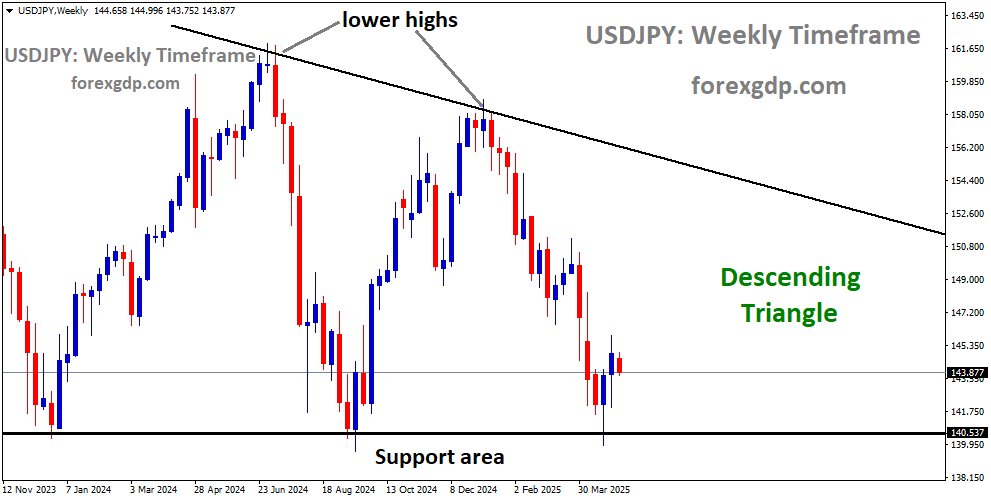
USDJPY is moving in a descending Triangle pattern
This paints a gloomy picture for Japan’s economy. Manufacturing plays a huge role in the country’s overall growth, and persistent weakness here raises concerns about long-term stability. On top of that, uncertainty from domestic politics and external risks, such as trade tensions with the United States, have only added more weight to the Yen’s decline.
Why this matters
When a nation’s economy looks weak, its currency often follows. Investors tend to pull out of riskier bets and seek stability elsewhere. In Japan’s case, the weak manufacturing outlook reduces confidence in the Yen, making it more vulnerable compared to stronger currencies like the US Dollar.
Bank of Japan Stuck Between Pressure and Patience
One of the biggest stories around the Yen right now is the role of the Bank of Japan (BoJ). For years, the BoJ has kept interest rates extremely low to support growth. But now, as inflation and economic challenges mount, the central bank faces pressure to start tightening its monetary policy.
Recently, hawkish voices within the BoJ have signaled that it might be time to move away from ultra-loose policies. However, the decision is anything but straightforward. A leadership election within Japan’s ruling Liberal Democratic Party (LDP) could further influence the direction of monetary policy. If a candidate with more dovish views comes into play, the BoJ could hold off on hikes for longer, delaying any meaningful shift.
Policy divergence with the Fed
What makes the Yen’s story even more complicated is the sharp contrast between the BoJ and the US Federal Reserve (Fed). While the BoJ has been cautious, the Fed has leaned toward easing after previously aggressive rate hikes. This difference in direction creates a policy gap, which often plays into currency movements. For the Yen, this divergence means that while it may struggle in the short term, its downside could also be limited because investors are cautious about the Fed’s next steps.

The US Dollar Gains Fresh Momentum
The Yen’s struggles aren’t just about Japan’s own economic woes. The US Dollar has also been flexing its muscles, adding extra weight to the USD/JPY pair. Recently, comments from Federal Reserve Chair Jerome Powell highlighted the challenges the US faces in balancing inflation control with job growth.
Powell made it clear that cutting rates too aggressively could reignite inflation, which means the Fed is not in a hurry to ease policy. This cautious approach has breathed new life into the Dollar, making it more attractive to investors. As a result, the Yen has found it even harder to hold its ground.
Data-driven moves
The Dollar’s strength is also tied to upcoming US economic data. Reports like GDP growth figures, the PCE Price Index, and housing market updates are closely watched by traders. Positive numbers could further boost the Dollar, keeping the Yen under pressure.
What Traders Are Watching Closely
The coming weeks hold several events that could shake things up for the Yen. Investors are keeping a sharp eye on the following:
-
Tokyo CPI (Consumer Price Index): A key gauge of inflation in Japan, which could directly impact expectations for the BoJ’s next move.
-
BoJ policy stance: Any fresh signals from policymakers about potential rate hikes or continued caution will set the tone for the Yen.
-
US economic releases: From GDP to consumer spending, these numbers will influence the Dollar’s momentum and, in turn, the USD/JPY outlook.
Why the outlook remains tricky
Even though fundamentals suggest the Yen should find some support, market behavior tells a different story. Traders remain cautious about betting heavily on the Yen because so many moving parts—domestic politics, central bank policies, and global uncertainties—are in play.
Final Summary
The Japanese Yen is caught in a web of weak economic data, political uncertainty, and global policy shifts. The struggling manufacturing sector has exposed vulnerabilities in Japan’s economy, while debates within the Bank of Japan highlight the challenge of moving away from years of ultra-loose monetary policy. On the other side, the US Dollar has regained strength thanks to cautious but firm signals from the Federal Reserve.
Looking ahead, the Yen’s path will depend heavily on domestic inflation data, political outcomes, and how the Fed’s policies evolve in the coming months. For now, the Yen may continue to drift lower, but with so many uncertainties, traders are wise to tread carefully.
USDCAD Gains Momentum as Risk-Off Mood Lifts the US Dollar
When it comes to currencies, few are watched as closely as the US Dollar. Over the past several days, the greenback has been enjoying a noticeable rally, strengthening for the third day in a row against its Canadian counterpart. While numbers and charts often dominate these discussions, the real story lies in what’s fueling this surge and what it means for both the US and Canadian economies. Let’s dive deeper into the bigger picture.
Why the US Dollar Is Back in the Spotlight
The latest upward push for the US Dollar has a lot to do with the current cautious mood in the global financial markets. Whenever investors feel uncertain or uneasy about the future, they tend to flock toward assets that are considered “safe havens.” The US Dollar often plays this role perfectly, which explains why demand for it is climbing once again.
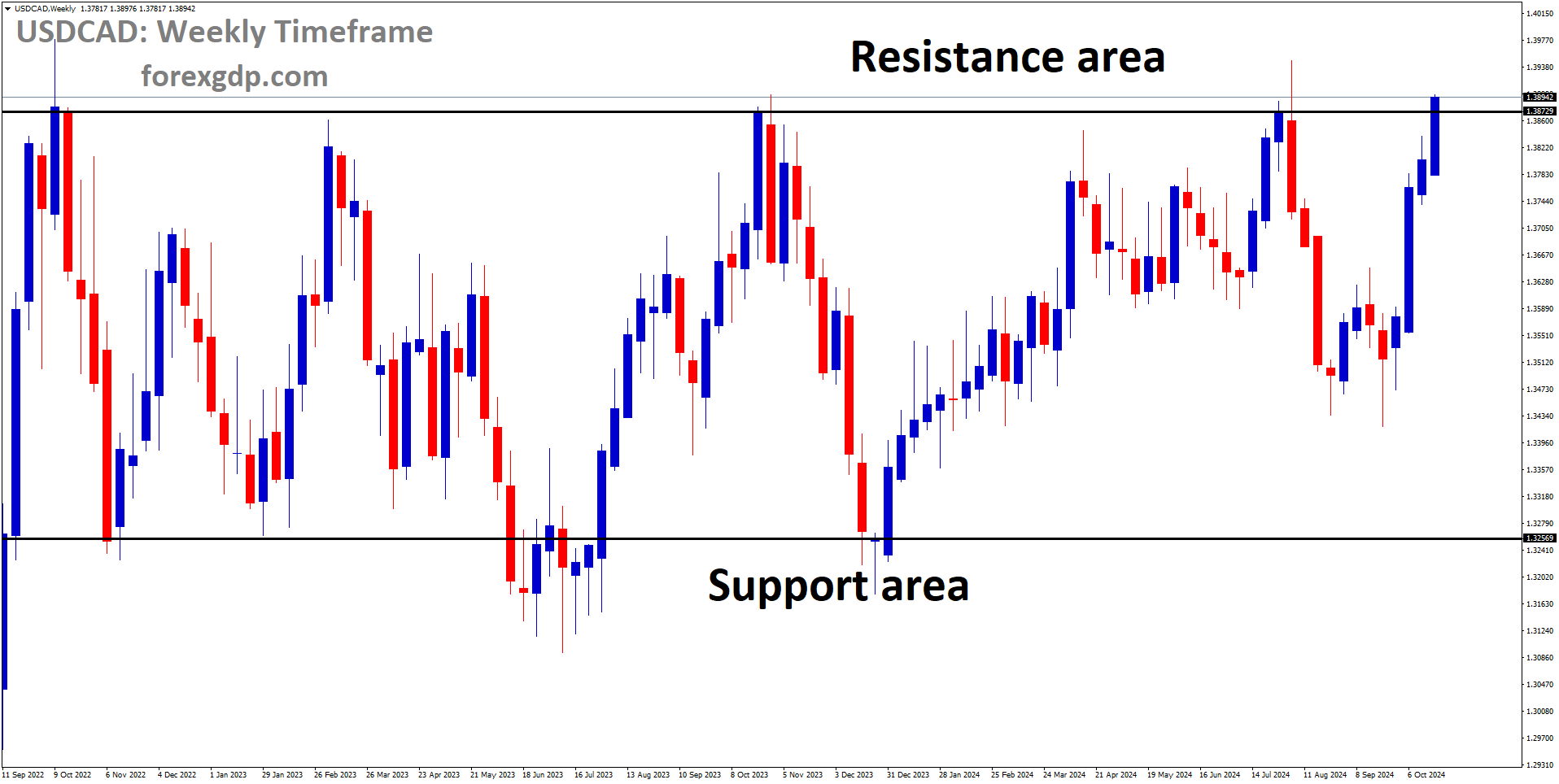
USDCAD is moving in a box pattern, and the market has reached the resistance area of the pattern
The Role of Geopolitical Risks
Right now, international tensions and geopolitical risks are creating a sense of instability. Investors, worried about unpredictable turns in global affairs, prefer to park their money in assets that are less risky. The Dollar benefits directly from this mindset, gaining ground as a reliable option when times get tough.
Investors Playing It Safe
It’s not only politics or global issues at play here. Many traders are hesitant to take big risks because of ongoing concerns about the economy. Instead of betting heavily on currencies like the Canadian Dollar, which tends to move more in line with commodity prices and economic growth, they are leaning toward the safer choice — the US Dollar.
The Fed’s Balancing Act
Of course, no discussion about the Dollar would be complete without looking at the US Federal Reserve. The central bank has been front and center in the debate over interest rates, inflation, and the overall direction of the economy.
Powell’s Recent Comments
Just this week, Federal Reserve Chairman Jerome Powell highlighted the delicate challenge facing the Fed. On one hand, the US labor market is showing signs of cooling. On the other, inflation remains a persistent risk. Powell reminded investors that while the central bank is aware of these pressures, further interest rate cuts are not something anyone should take for granted.
That was enough to cause a stir, but interestingly, many market players shrugged off his cautionary tone. Instead, they continue to bet heavily on the idea that rate cuts are still coming, likely before the end of the year.
What the Market Is Expecting
Despite Powell’s warning, investors are already pricing in the likelihood of interest rate reductions over the next few months. This expectation gives the Dollar mixed momentum. On one hand, rate cuts usually weaken a currency because they lower returns for investors. On the other hand, uncertainty around timing and economic performance keeps the Dollar in demand.
Canada’s Struggle With Economic Pressures
While the US side of the story revolves around Fed policy and market caution, Canada’s narrative is somewhat different. The Canadian Dollar, also known as the “loonie,” has been struggling to gain traction.

Macklem’s Warning
Bank of Canada Governor Tiff Macklem recently voiced concerns about systemic risks facing the Canadian economy. He pointed to shifts in global trade, financial flows, and the broader challenges that Canada faces in adapting to these changes. His warning struck a chord with investors, reminding them that the Canadian economy may be more vulnerable than it appears on the surface.
Rate Cuts in Canada
The Bank of Canada has already taken steps to stimulate its economy, including cutting interest rates to levels not seen in several years. But with additional cuts still on the table, the Canadian Dollar is finding it difficult to compete with its stronger US counterpart. This has limited its ability to recover or make significant gains, even when conditions seem favorable.
A Look at Recent Economic Data
Economic reports also play a part in shaping the Dollar’s journey. While not explosive, recent data from the United States has added context to the current market mood.
-
Manufacturing Performance: The preliminary US Manufacturing PMI showed a slight dip in September, signaling slower momentum compared to August.
-
Services Sector: Similarly, activity in the services sector also cooled a bit but remained in line with expectations.
These readings confirm that while the US economy isn’t running at full throttle, it’s not collapsing either. This steady, though modest, performance continues to support the idea that the Dollar remains a dependable option for investors.
What It All Means Going Forward
At this stage, the Dollar’s rally is less about dazzling economic growth and more about trust, stability, and caution. With global risks looming and both the Federal Reserve and the Bank of Canada weighing their next steps, the US Dollar is standing tall as the preferred safe-haven currency.
For the Canadian Dollar, the path forward looks more challenging. With domestic concerns, potential rate cuts, and warnings from its central bank, it’s struggling to keep pace with the strength of its American rival.
Final Summary
The US Dollar’s recent rally highlights how global uncertainty often benefits safe-haven assets. Geopolitical tensions, cautious investor behavior, and ongoing debates over interest rate cuts have all pushed the greenback higher for several consecutive days. While the Federal Reserve carefully weighs its next move, investors remain confident that the Dollar is still the safest bet.
Meanwhile, Canada faces a tougher road. With warnings from the Bank of Canada and continued expectations of further rate cuts, the Canadian Dollar finds itself under pressure. Looking ahead, much will depend on how global risks evolve and whether central banks deliver the policy moves investors are banking on. For now, the US Dollar continues to hold the upper hand, standing firm in a world of uncertainty.
AUDUSD Pushes Upward Despite Ongoing Strength in the US Dollar
When it comes to global currencies, few pairs are as closely watched as the AUD/USD. Recently, the Australian Dollar (AUD) has been grabbing attention as it managed to strengthen against the US Dollar (USD), even though the Greenback itself has been trading firmly. Let’s dive into why this is happening, what factors are driving the movements, and what it might mean for the near future.
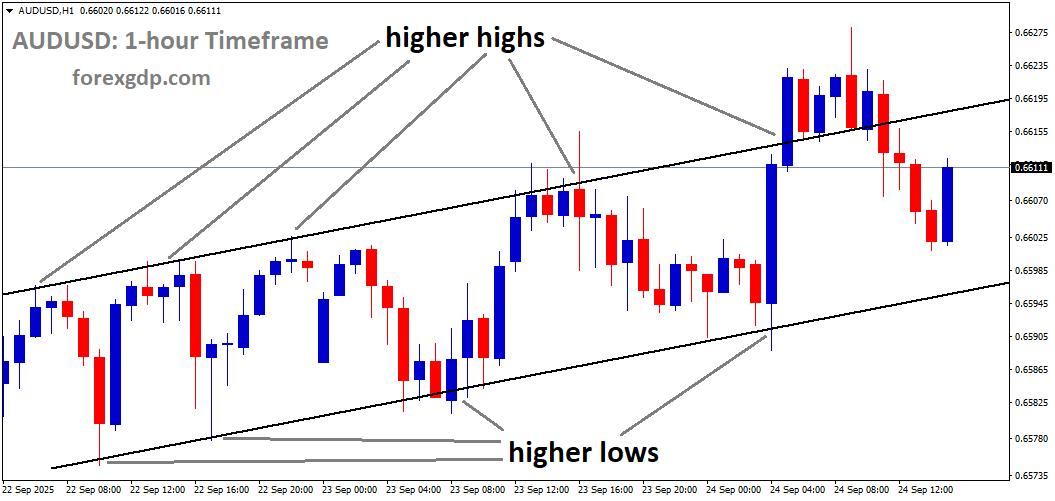
AUDUSD is moving in an uptrend channel, and the market has fallen from the higher high area of the channel
The Federal Reserve’s Cautious Tone
One of the biggest influences on global currency markets is the US Federal Reserve. Whenever the Fed speaks, investors listen closely. Recently, Fed Chair Jerome Powell sent a clear signal of caution. He emphasized that while inflation risks remain tilted upward, the central bank is not in a rush to change interest rates.
Powell highlighted that the current range of interest rates gives the Fed enough flexibility to respond to whatever the economy throws its way. This careful approach suggests that policymakers are trying to strike a balance—keeping inflation under control without putting too much pressure on the labor market.
Interestingly, not everyone at the Fed shares the exact same viewpoint. Fed Governor Michelle Bowman leaned in the other direction, suggesting that rates should be lowered sooner rather than later to avoid further damage to the job market. Her perspective reflects a growing concern: once the labor market weakens significantly, fixing it can be a lot harder.
This difference in tone between Powell and Bowman shows that even inside the Fed, there’s still debate about the best way forward. For traders, that uncertainty keeps the US Dollar in a somewhat delicate position.
Australia’s Inflation Surprise
On the other side of the globe, Australia has been showing some surprising economic strength. The Monthly Consumer Price Index (CPI) for August came in at 3%, which was higher than both the previous month and expectations. This indicates that price pressures in Australia are not only persisting but are also growing slightly faster than predicted.
Why does this matter? Central banks like the Reserve Bank of Australia (RBA) rely heavily on inflation data when setting policies. Stronger inflation usually means the RBA is less likely to cut rates anytime soon. In fact, it could even encourage them to hold their current stance longer, ensuring inflation doesn’t spiral out of control.
For the Australian Dollar, this is good news. Rising inflation strengthens the case for the RBA to stay firm, which makes the currency more attractive to global investors. That’s why the Aussie has been outperforming many of its peers lately.
AUD vs USD: Why the Aussie is Winning Right Now
So, what’s happening with the AUD/USD pair at the moment? Despite the US Dollar showing resilience, the Australian Dollar has managed to gain ground. This comes down to a simple mix of factors:

-
Cautious Fed stance: With Powell not rushing into rate cuts or hikes, the USD doesn’t have a strong upward driver.
-
Stronger Aussie data: Australia’s inflation reading gave traders confidence that the RBA will keep a firm hand on monetary policy.
-
Investor sentiment: Many traders view the AUD as a currency tied to growth and commodities. When economic data looks solid, it often sparks interest in the Aussie.
This combination of events has made the Australian Dollar shine, pushing the AUD/USD pair upward during recent trading sessions.
How Traders Are Reacting
Global investors love clarity, and right now, both the Fed and the RBA are keeping markets on their toes. While Powell stresses caution, Bowman pushes for quicker cuts, and the RBA leans toward holding rates due to stronger inflation. This tug-of-war between policies creates opportunities for currency traders.
For the AUD/USD specifically, the market is rewarding Australia’s stronger inflation outlook. Even though the USD is far from weak, the Aussie’s edge is enough to tilt the balance in its favor—at least for now.
Looking Ahead: What Could Come Next?
The near future of AUD/USD depends on how these storylines evolve. A few things to keep an eye on include:
-
Federal Reserve policy updates: Any shifts in Powell’s tone could quickly move the USD.
-
US labor market data: Since the Fed is highly focused on jobs, weak employment numbers could push policymakers toward easing.
-
Australian inflation trends: If inflation keeps rising, the RBA will have more reason to stay firm, which supports the AUD.
-
Global risk appetite: The Aussie Dollar often moves with global risk sentiment. If markets feel optimistic, AUD tends to do well.
These factors together will decide whether the AUD continues its winning streak against the USD or if the Greenback regains momentum.
Final Summary
The AUD/USD story right now is one of contrasts. On one side, you have a cautious Federal Reserve trying to balance inflation with job market risks. On the other, you have Australia’s inflation coming in stronger than expected, giving the RBA less room to ease up.
This tug-of-war has tilted in favor of the Australian Dollar for the moment, allowing it to outperform peers and climb higher against the US Dollar. While uncertainty remains, especially with differing views inside the Fed, the Aussie’s stronger economic backdrop gives it a temporary edge.
In short, the AUD/USD movement isn’t just about numbers on a chart—it’s about the bigger story of two economies navigating challenges differently. For anyone watching global markets, it’s a fascinating reminder of how inflation, central banks, and investor sentiment all come together to shape currency trends.